The Rottweiler ranked No. 8 in the AKC's 2025 popularity rankings. The Dutch Shepherd, in the AKC's words, is "not a widely known breed." Here is how the two compare, from the AKC's Dutch Shepherd breed page, both official standards, the AKC's expert articles and the American Rottweiler Club. We breed Dutch Shepherds, and our honest read is that these are two big, smart working breeds that both do best in an active home and need training. Where they differ, the Rottweiler is the simpler choice if you want a breed that is already in the AKC Stud Book, and a short-haired Dutch Shepherd may suit a home that wants less brushing.

At a glance
Heights come from each breed's official standard. Neither standard sets a weight, so each weight is named with its page.
- AKC status: the AKC's history article says the AKC added the Rottweiler to its stud book in 1931, and the breed became a member of the Working Group. The Dutch Shepherd has been in the Foundation Stock Service since April 2012, has been approved to compete in the Miscellaneous Class since January 1, 2017, has been assigned the Herding Group designation, and moves into the AKC Stud Book on June 30, 2027.
- Height: Rottweiler, 24 to 27 inches for males and 22 to 25 inches for females. Dutch Shepherd, 22½ to 24½ inches for males and 21½ to 23½ inches for females.
- Weight: the AKC says the Rottweiler tends to weigh between 80 and 135 pounds (AKC article). The Dutch Shepherd is 42 to 75 pounds (AKC breed page).
- Coat: Rottweiler, straight, coarse, dense, of medium length and lying flat, with an undercoat on the neck and thighs. Dutch Shepherd, short, long or rough, each with a woolly undercoat.
- Standard colors: Rottweiler, always black with rust to mahogany markings. Dutch Shepherd, brindle on a golden or silver base.
- AKC trait scores (Dutch Shepherd breed page): the Dutch Shepherd sits at the "High Energy" end for energy, the "Eager to Please" end for trainability and the "Needs a Job or Activity" end for mental stimulation, 5 of 5 each. For the Rottweiler we quote the AKC's words, not scores.
Our pair, for the record: Azul (our female) is 75 to 80 pounds and Dabo (our male) is heavier. Those are two adult dogs, not a promise about any puppy's adult size. Our size guide has more, and our Stud Book explainer covers the 2027 move.
Where each one comes from
The AKC's history article says the Rottweiler "descends from mastiffs that lived in the Roman Empire more than 2,000 years ago." Those ancestors helped move cattle and "kept the livestock safe from predators and thieves." In what is now Rottweil, Germany, the dogs herded livestock in butchers' yards and pulled heavy carts of meat to market, and became known as the "Rottweiler Metzgerhund," or "Butcher's Dog of Rottweil." One hedge, from another AKC article: "there is no documentation of the Rottweiler's origins."
The AKC says the Dutch Shepherd "was developed as an all-purpose farm dog, working originally as a farm guard, drover, and livestock dog." Its AKC history adds that on the farm it "watched the children and alerted the farmer if strangers entered the farmyard."
Size and strength: the biggest difference
The Rottweiler standard describes "a medium large, robust and powerful dog" whose "compact and substantial build denotes great strength, agility and endurance." The Dutch Shepherd standard asks for a "well-muscled dog of powerful and well-balanced structure" with "lots of endurance." The two weights come from different AKC pages, but the ranges do not overlap: the Rottweiler tends to weigh between 80 and 135 pounds, the Dutch Shepherd 42 to 75. Our own pair sits at the top of the Dutch range and past it: Azul is 75 to 80 pounds, and Dabo is heavier.
Size matters most with children. The AKC says the Rottweiler's size and love for play "may be too much for families with small children."
Energy and exercise: both do best in an active home
The AKC calls the Rottweiler "a very active breed" that would "fare best in an active household," and says Rottweilers "require a lot of exercise." The American Rottweiler Club, which the AKC's history article calls the "national parent club," says "Puppies AND adults need socialization, exercise and stimulating mental challenges."
The Dutch Shepherd, in the AKC's words, "has been bred for hard work, and plenty of it," and "does not want to be a pet left at home; they want to be your partner in life." The AKC adds that the dog "will differentiate between work, play, and chill time, adjusting its energy level accordingly." That is the off-switch. Our guides to exercise and mental exercise cover it.
Coat and grooming
The AKC says the Rottweiler's coarse coat "should be brushed weekly and bathed regularly," and that Rottweilers "shed moderately, with periods of heavier shedding in the fall and spring."
The AKC breed page scores the Dutch Shepherd 3 of 5 for shedding and 2 of 5 for grooming frequency. A short-haired Dutch Shepherd "will only need occasional brushing," switching to daily brushing during the spring and fall sheds. Long-haired ones need grooming about once a week, rough-haired ones a combing once a month and hand-stripping twice a year. Our coat guide covers all three Dutch coats.
Temperament: strangers, family and kids
The Rottweiler standard calls the breed "basically a calm, confident and courageous dog with a self assured aloofness that does not lend itself to immediate and indiscriminate friendships." The AKC says "territorial instincts may kick in around strangers," but that "continued exposure to new people and environments can encourage them to be more social," and that the breed "can be territorial, but proper training can help discourage the negative aspects of this trait." The American Rottweiler Club: "we firmly believe they are not a dog for everyone."
The Dutch Shepherd standard asks for "loyalty and reliability, alertness, and watchfulness," and the AKC breed page scores the breed 5 of 5 on the watchdog scale, at the "Vigilant" end, and 3 of 5 for openness to strangers. The same page scores it 3 of 5 for young children, with the AKC's note: "Dogs should always be supervised around young children, or children of any age who have little exposure to dogs."
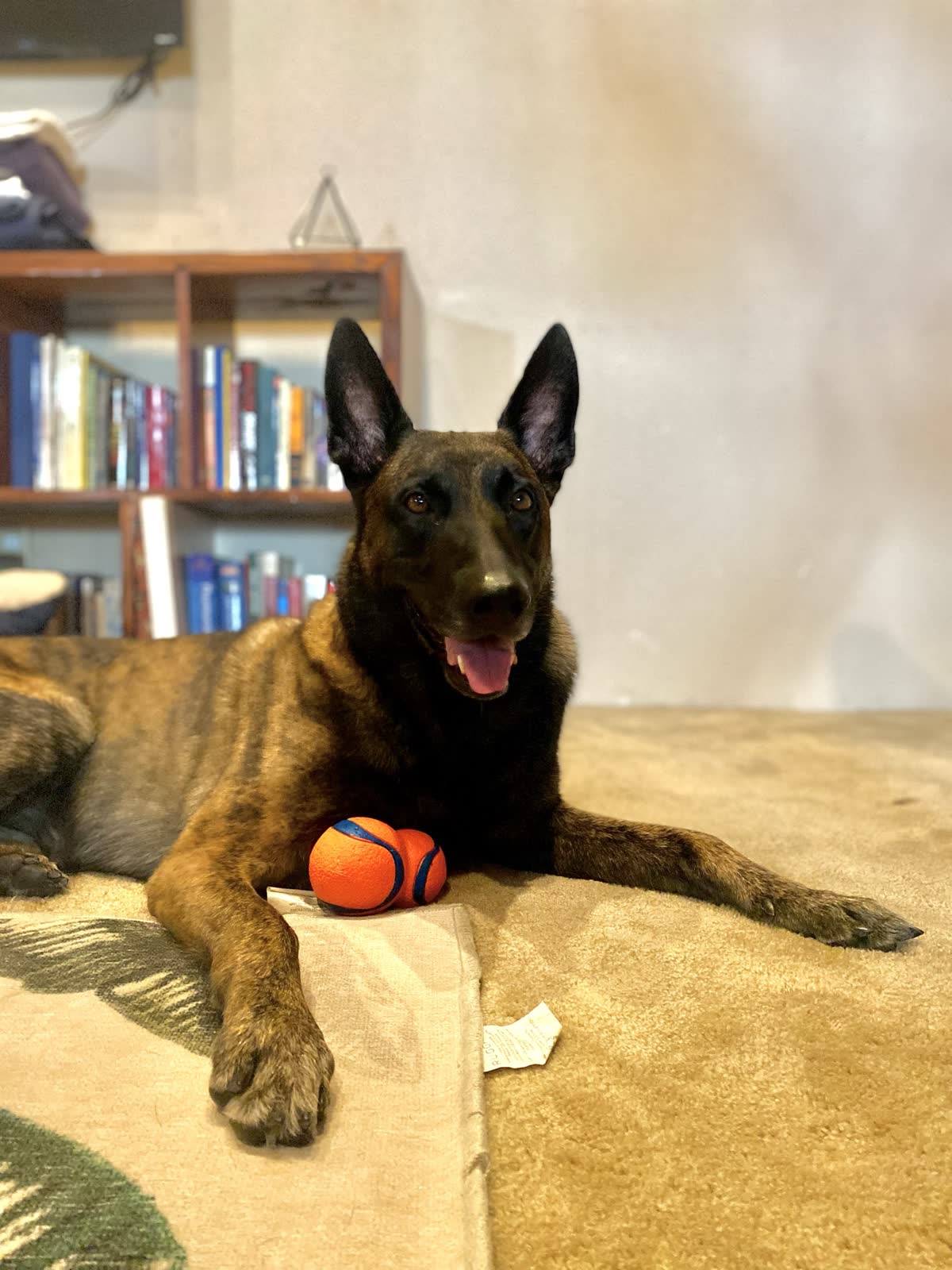
For families, the AKC says Rottweilers are "devoted to their owners," and that "if trained properly, Rottweilers are patient with children." It adds that parents should always supervise their children around their animals. For the Dutch Shepherd, "provided with proper mental and physical exercise," the AKC says the dog "makes a great pet for an active family familiar with dogs." Our temperament guide and working dogs and kids guide go deeper.
Training
The AKC says "Early training is essential for Rottweilers," and calls them "people pleasers and highly adaptive, but can be prone to stubbornness." Owners should discipline their Rottweilers "in a consistent, firm manner," the AKC says. It adds that Rottweilers socialized at an early age "can be social and get along well with other dogs and people."
The Dutch Shepherd "does better with shorter training sessions (with little repetitions)," the AKC says, and has "an independent nature" that "can be slightly obstinate and have a mind of its own." The AKC's warning: "Without training, this breed will become very independent and will start to make its own decisions, so obedience training is highly recommended." Our dog sports guide covers what a Dutch Shepherd can enter now.
Who each one fits
- Lean Rottweiler if you want the larger dog, want a breed that is already in the AKC Stud Book, are an active household, and will start training and socialization early and keep them up.
- Lean Dutch Shepherd if your family is active and has raised dogs before, can give the dog proper mental and physical exercise. A short-haired one needs only occasional brushing, and daily brushing in the spring and fall sheds, the AKC says.
- Neither if you want a dog with little to do. The AKC says the Dutch Shepherd "does not want to be a pet left at home," and the American Rottweiler Club says puppies and adults need exercise and mental challenges.
If you want the larger dog, or a breed with a long AKC Stud Book record today, the Rottweiler is the simpler choice, and we would rather say so plainly than point you toward the wrong dog.
Which one?
Pick either and you take on a strong, smart working breed that needs training, company and room to move. If you want the larger dog, choose the Rottweiler. If your family is active and has raised dogs before, the Dutch Shepherd may be your dog.
Still weighing breeds? Read our comparisons with the Doberman and the German Shepherd, then work through our ten honest questions.
Sources
- American Kennel Club: Dutch Shepherd breed page (weight, group, AKC status, trait scores, origin and history, temperament, grooming, exercise, training)
- American Kennel Club: Official Standard for the Dutch Shepherd (PDF; height, coat, color, temperament)
- American Kennel Club: Official Standard of the Rottweiler (PDF; height, coat, color, temperament)
- American Kennel Club: Is the Rottweiler a Good Fit for You? (Micaela Erickson, updated April 24, 2025; weight, grooming, training, family life)
- American Kennel Club: Rottweiler History: From Working Dog to Sporting, Therapy Dog (Elaine Waldorf Gewirtz, updated June 27, 2024; origins, 1931 stud book entry, Working Group)
- American Kennel Club: Rottweiler Facts You May Not Know (Jan Reisen, updated April 2, 2025; origins)
- American Rottweiler Club: About the Rottweiler (updated February 4, 2026; socialization, exercise, mental challenges)
- American Kennel Club: Meet the Most Popular Dog Breeds of 2025 (Melanie Haid, updated August 11, 2026; Rottweiler No. 8)
- American Kennel Club: Board of Directors meeting minutes, September 15 to 16, 2026 (PDF; Dutch Shepherd Stud Book entry June 30, 2027)