The striped coat is the most striking thing about a Dutch Shepherd, and, as we argued in our piece on the wrong reasons to want one, it is the least important reason to bring one home. Still, a coat is something you live with every day, and you deserve straight answers before you apply. Here is what brindle actually is, why the standards call for it, the three coat types, and how much brushing each one asks of you.
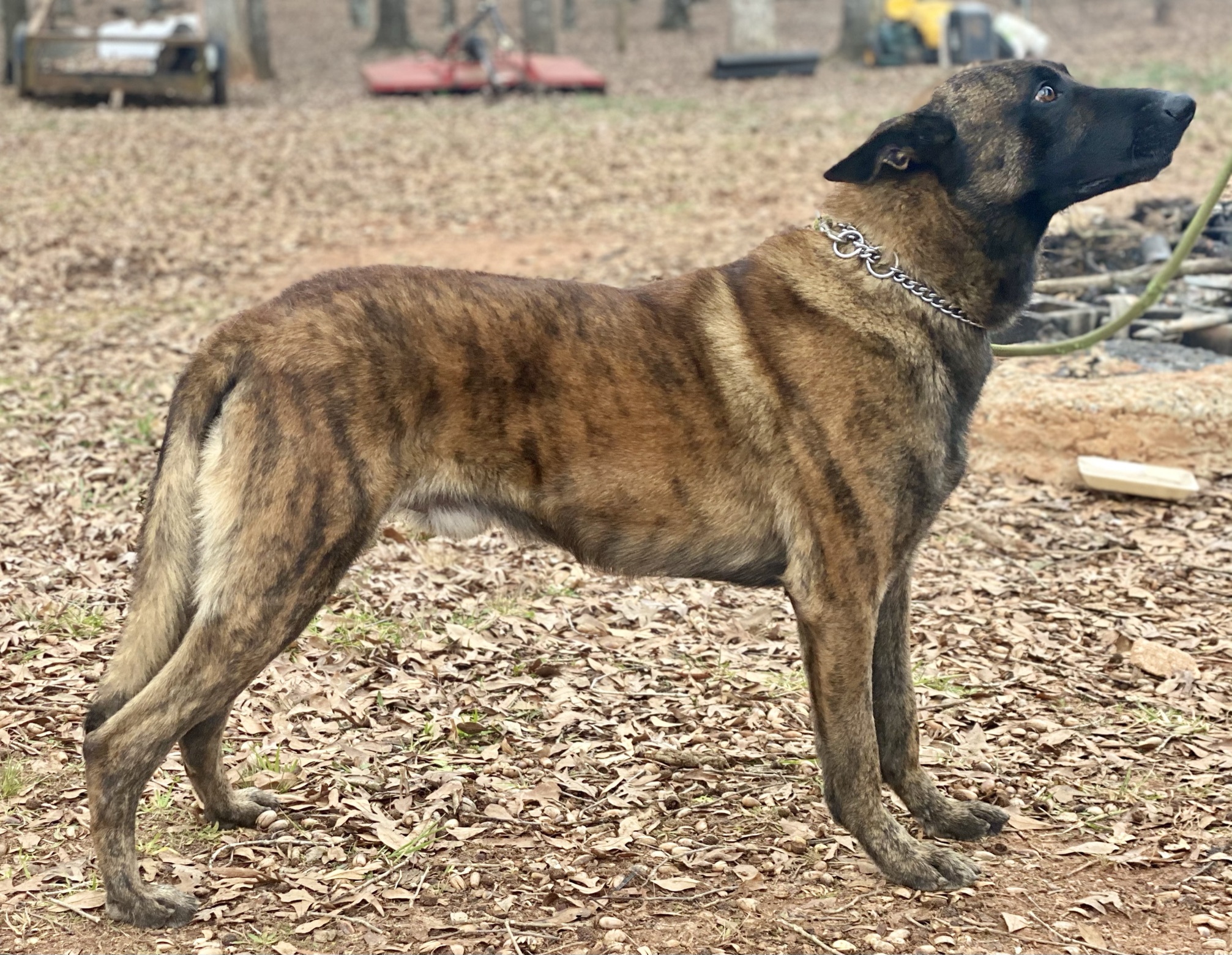
Why the Dutch Shepherd is a brindle breed
It was not always this way. The breed's first standard dates from June 12, 1898, and according to the American Kennel Club, that original standard permitted any coat color. By 1914, it was decided that the Dutch Shepherd should only be brindle, to set it apart from two similar breeds of the time: the German Shepherd and the Belgian Shepherd.
Today the breed descriptions agree. The international FCI standard names a single color: brindle. The AKC describes the coat as gold brindle or silver brindle. And the United Kennel Club, which registers both of our dogs, calls the brindle color pattern "the only acceptable pattern" in the breed.
What brindle actually is
The UKC standard defines brindle as "a black or very dark streaked or striped effect, with hairs of a lighter background color." That background is where the variety comes from. The FCI standard allows a golden or a silver base, and says golden can run anywhere from light sand to chestnut red. The same standard asks for brindle that is clearly present all over the body, including the ruff, the breeches and the tail, and it prefers a black mask.
What the standards discourage is worth knowing too. The FCI calls too much black undesirable, along with heavy white markings on the chest or feet. The UKC allows very small white accents on the chest and feet, treats white stripes or spots anywhere else as a serious fault, and disqualifies solid black body patches from its conformation ring.
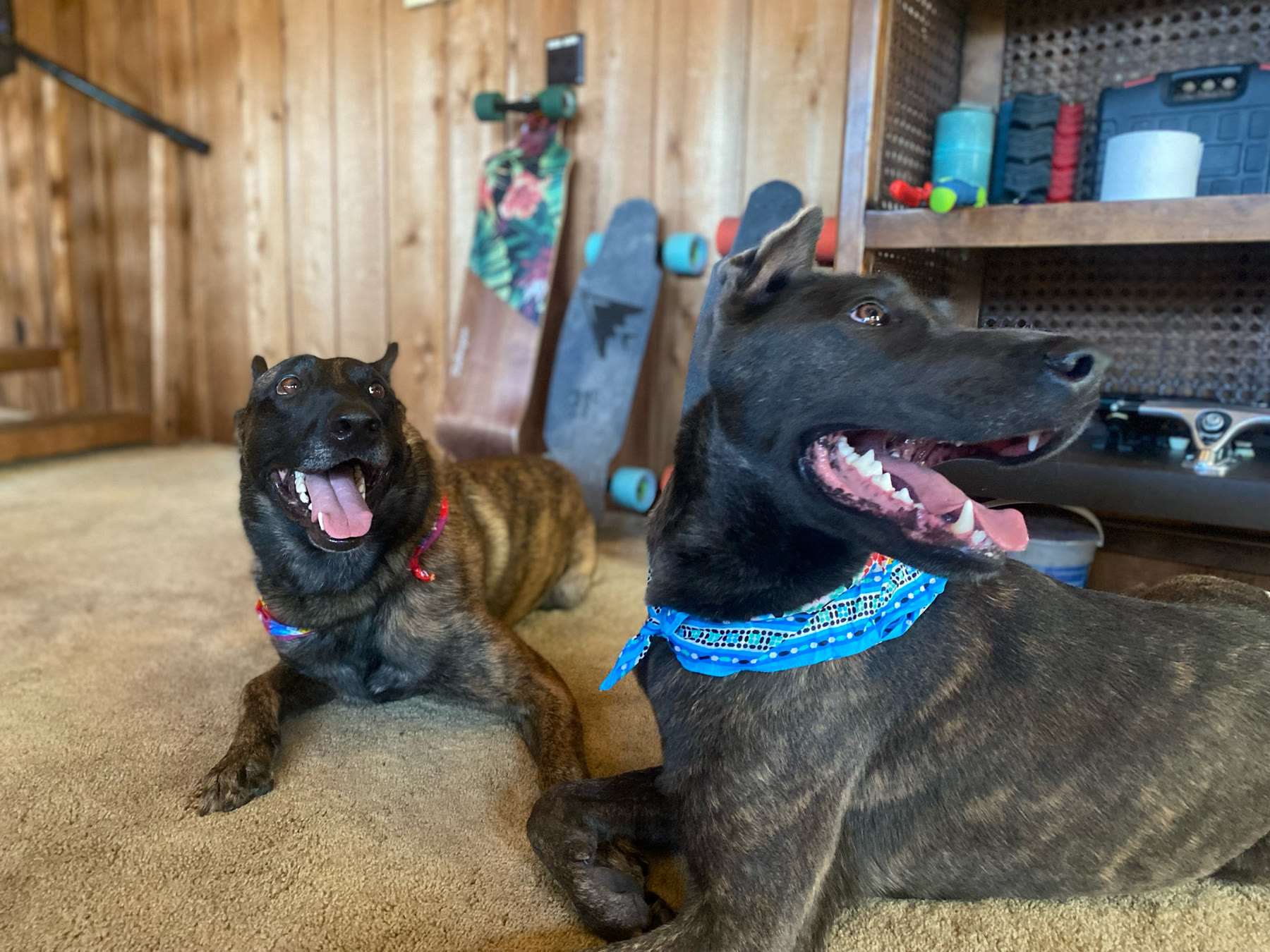
Three coats, one breed
The breed comes in three coat varieties. The FCI calls the third one wire-haired; the AKC and UKC call it rough.
Short coat
Quite hard and close-fitting over a woolly undercoat, with a clearly visible ruff, breeches and tail plume. This is the coat Azul and Dabo wear, and the one you see in every photo on this site.
Long coat
Long, straight and harsh to the touch, with no curls or waves and a woolly undercoat. The backs of the forelegs are feathered, while the head, ears and feet stay short and dense. The ears carry no fringes.
Rough coat
Dense, harsh and tousled over a woolly undercoat, with a moustache, a beard and coarse eyebrows. The tousled coat can make the brindle look less pronounced, and it makes the head look more square. The FCI standard adds, a little dryly, that the square look "is an illusion."
The grooming commitment, coat by coat
Here is the AKC's grooming guidance for the breed, in plain terms:
- Short coat: occasional brushing most of the year, then daily brushing during the seasonal shedding periods in the spring and fall. Easy, but not shed-free.
- Long coat: grooming about once a week, or more often if the dog's work and surroundings call for it.
- Rough coat: a combing about once a month, and hand-stripping twice a year. If hand-stripping is new to you, talk to a groomer about it before you commit to a rough-coated dog.
- Every coat: bathe as needed, trim nails with a clipper or grinder, check ears regularly for wax and debris, and brush teeth.
Put that next to the rest of the job and grooming is the easy part. The real commitment is the daily training and outlet this breed needs, which we cover in the off-switch piece and our guide to dog sports.
What a color claim should make you ask
Because the standards are this clear, color is one of the few things you can check in an ad at a glance. A dog sold as a Dutch Shepherd that is solid black, solid fawn, or heavily marked with white does not match the FCI or UKC description of the breed. That does not make it a bad dog. It does mean you should ask what the papers say, and why the dog looks the way it does.
Be just as careful with "rare color" language. In a breed where the standard calls for brindle on every dog, a seller who leads with the shade is telling you what they think matters most.
Why we match by temperament, not color
The shade of a puppy's stripes is the part you will think about least after the first week home. What you will live with every day is the temperament. That is why our puppies get individual temperament evaluations at six to seven weeks, and we share them with every family so the choice rests on temperament, not color.
Still weighing the breed itself? Start with our ten honest questions, or read our honest comparison with the Malinois.
Sources
- American Kennel Club: Dutch Shepherd breed page (history, 1898 standard and brindle-only by 1914; coat colors and types; grooming guidance)
- FCI: Standard No. 223, Hollandse Herdershond (Dutch Shepherd Dog) (coat varieties, color, grooming of the wire coat)
- United Kennel Club: Dutch Shepherd breed standard, revised May 1, 2017 (brindle definition, color faults, disqualifications)