A long walk tires the legs. It does not always tire the mind, and with a Dutch Shepherd the mind is the part that gets you in trouble. The AKC puts it simply: giving your dog's brain a workout is as important as exercising its body. "Plus, it's equally exhausting." Here is why this breed needs brain work, how to spot a bored dog, and six games you can start tonight with things you probably already own.
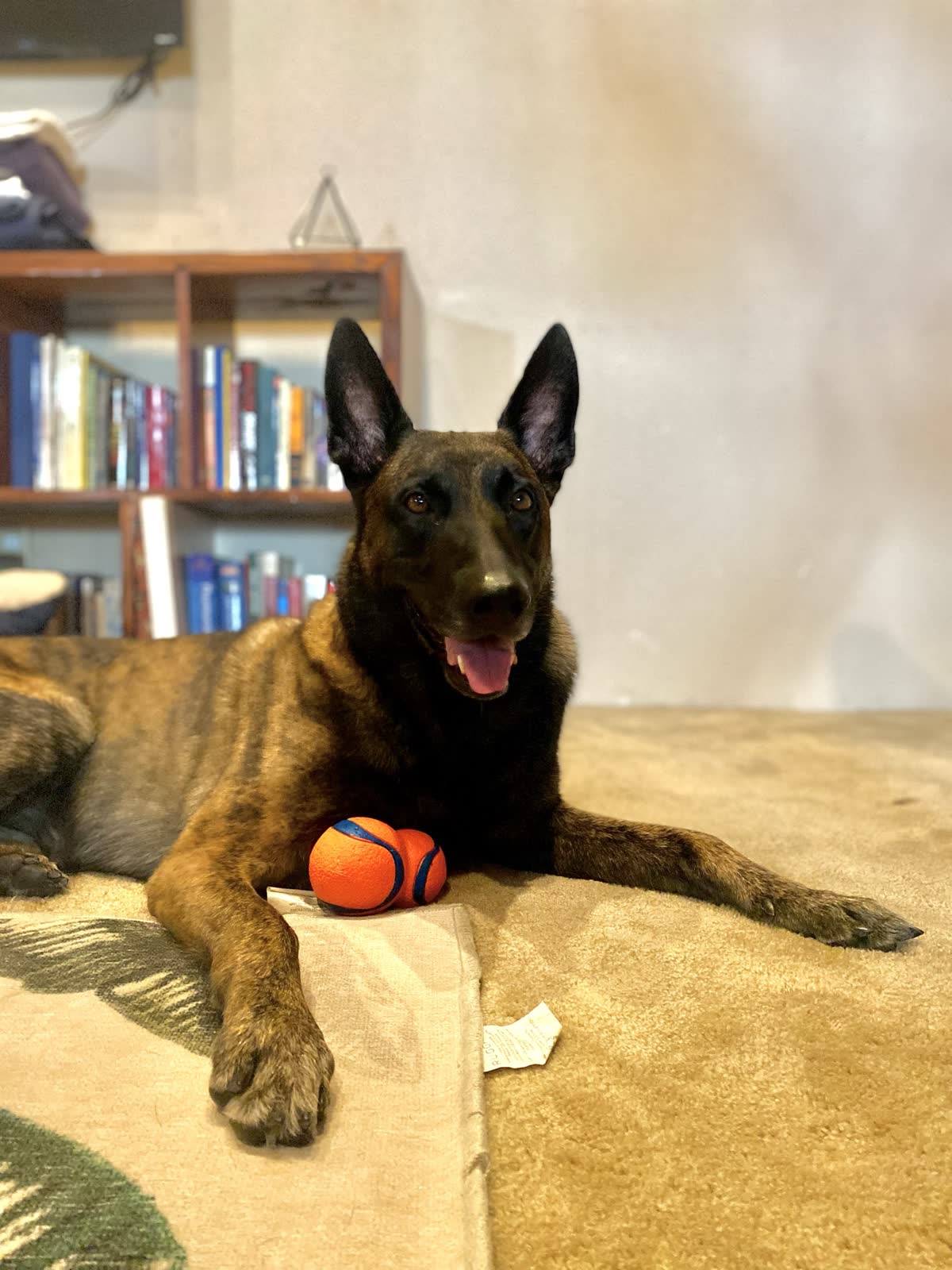
Why this breed needs brain work
The AKC rates every breed on a "Mental Stimulation Needs" scale that runs from "Happy to Lounge" to "Needs a Job or Activity." The Dutch Shepherd scores 5 of 5, at the "Needs a Job or Activity" end. The AKC's note on that scale is blunt about purpose-bred dogs: without the brain exercise they need, "they'll create their own projects to keep their minds busy," and "they probably won't be the kind of projects you'd like."
The breed's own AKC page adds the useful detail. The Dutch Shepherd "does better with shorter training sessions (with little repetitions)," and becomes more driven as the work becomes more mentally stimulating. Short, varied and challenging beats long and repetitive.
What a bored dog looks like
In its guide to bored dogs, the AKC lists the usual signs: chewed furniture and shoes, shredded pillows, digging in the yard and tipped-over trash cans. At home you might see restlessness, constant attention seeking, jumping on people or excessive barking. The AKC adds one caution: if you see destruction together with a clingy dog, rule out separation anxiety, and talk to a trainer or behaviorist if you are worried.
Six brain games to start tonight
1. The muffin tin puzzle
From the AKC's scent games guide: put treats in a few cups of a muffin tin, cover those with tennis balls, then fill every empty cup with a ball too. Your dog has to move balls to find the food. Change where the treats go each time so the nose does the work, not the memory.
2. The cup trick
Put a treat under one sturdy cup while your dog watches, and let it win. Add a second, empty cup. When your dog picks the right one, praise and lift. As it gets better, add cups and shuffle them, so it has to sniff instead of remembering the spot.
3. The box search
Spread a few clean delivery boxes across the floor while your dog waits in another room. Put treats in one or several, then invite the search. The AKC suggests ending with a treat in your hand that you use to lead your dog away, so the game ends with you instead of a frustrated search of empty boxes.
4. Make meals work
Feed from a slow feeder bowl or a food-releasing toy, or scatter the kibble around the house or yard and let your dog sniff it out. In the AKC's words, mealtime goes "from a two-minute gobble-fest to a half-hour game." It takes no extra food, because your dog was going to eat anyway.
5. Teach a trick
When basic obedience runs out, the AKC suggests trick training, and its Trick Dog titles give you something to aim for. It suggests looking for a class that uses marker training, such as a clicker, a style of positive reinforcement in which dogs learn to offer new behaviors instead of waiting for instructions. For a breed that likes to think, that is the fun part.
6. Hide and seek
Have someone hold your dog while you hide, then call once and let your dog find you. The AKC lists hide and seek and tug-of-war as games that challenge the mind and build your bond at the same time.
From games to a real job
The AKC says one of the best ways to prevent boredom is to give your dog a job. Scent games are a natural first step. If your dog loves the box search, the AKC's Scent Work sport starts with birch essential oil at the Novice level and adds anise, clove and cypress at the higher levels. The breed also kept its herding instinct, as covered in our history of the breed. Our guide to dog sports walks through the options.
Play it safe
- Match the toy to the jaw. The AKC says to make sure a puzzle toy's durability matches your dog's jaw power and its size fits your dog.
- Supervise the homemade ones. Paper rolls and paper bags are fine puzzles, but the AKC says to watch that your dog is not eating the paper.
- Rotate. The AKC suggests rotating toys often. An old toy feels new after a few days away.
Pair the brain work with rest. Read the off-switch for how a working dog learns to settle, then work through our ten honest questions.
Sources
- American Kennel Club: Dutch Shepherd breed page (Mental Stimulation Needs score and scale note; training)
- American Kennel Club: Bored Dogs: How to Recognize and Solve Doggy Boredom (signs of boredom, mental stimulation, mealtime games, trick and marker training, jobs, toy rotation)
- American Kennel Club: Indoor Scent Games for Dogs (muffin tin puzzle, cup game, box search, Scent Work odors)
- American Kennel Club: Brain Games for Dogs: When Can a Puzzle Be the Solution? (puzzle toy durability and size)