In February 2026, a Doberman Pinscher named Penny won Best in Show at the 150th Westminster Kennel Club Dog Show. If that put a Doberman on your list, you are probably weighing a sleek, athletic guardian that bonds hard with its family. The Dutch Shepherd fits that description too, from a different direction. Here is how the two breeds compare on size, coat, temperament, ears and tails, health screening and daily needs, using the American Kennel Club's breed pages and the official breed standards, and which one fits which home.
Side by side
Every figure below is the AKC's.
- Height: Doberman, 26 to 28 inches for males and 24 to 26 inches for females. Dutch Shepherd, 21.5 to 24.5 inches.
- Weight: Doberman, 75 to 100 pounds for males and 60 to 90 pounds for females. Dutch Shepherd, 42 to 75 pounds.
- Life expectancy: Doberman, 10 to 12 years. Dutch Shepherd, 11 to 14 years.
- Coat: Doberman, "smooth-haired, short, hard, thick and close lying." Dutch Shepherd, short, long or rough.
- Color: Doberman, black, blue, red or fawn, with rust markings. Dutch Shepherd, gold brindle or silver brindle.
- AKC group: the Doberman is in the Working Group. The Dutch Shepherd has been assigned the Herding Group.
- AKC status: the Doberman was recognized by the AKC in 1908 and ranks 15th of 210 breeds in popularity. The Dutch Shepherd has been in the Foundation Stock Service since April 2012 and moves into the AKC Stud Book on June 30, 2027.
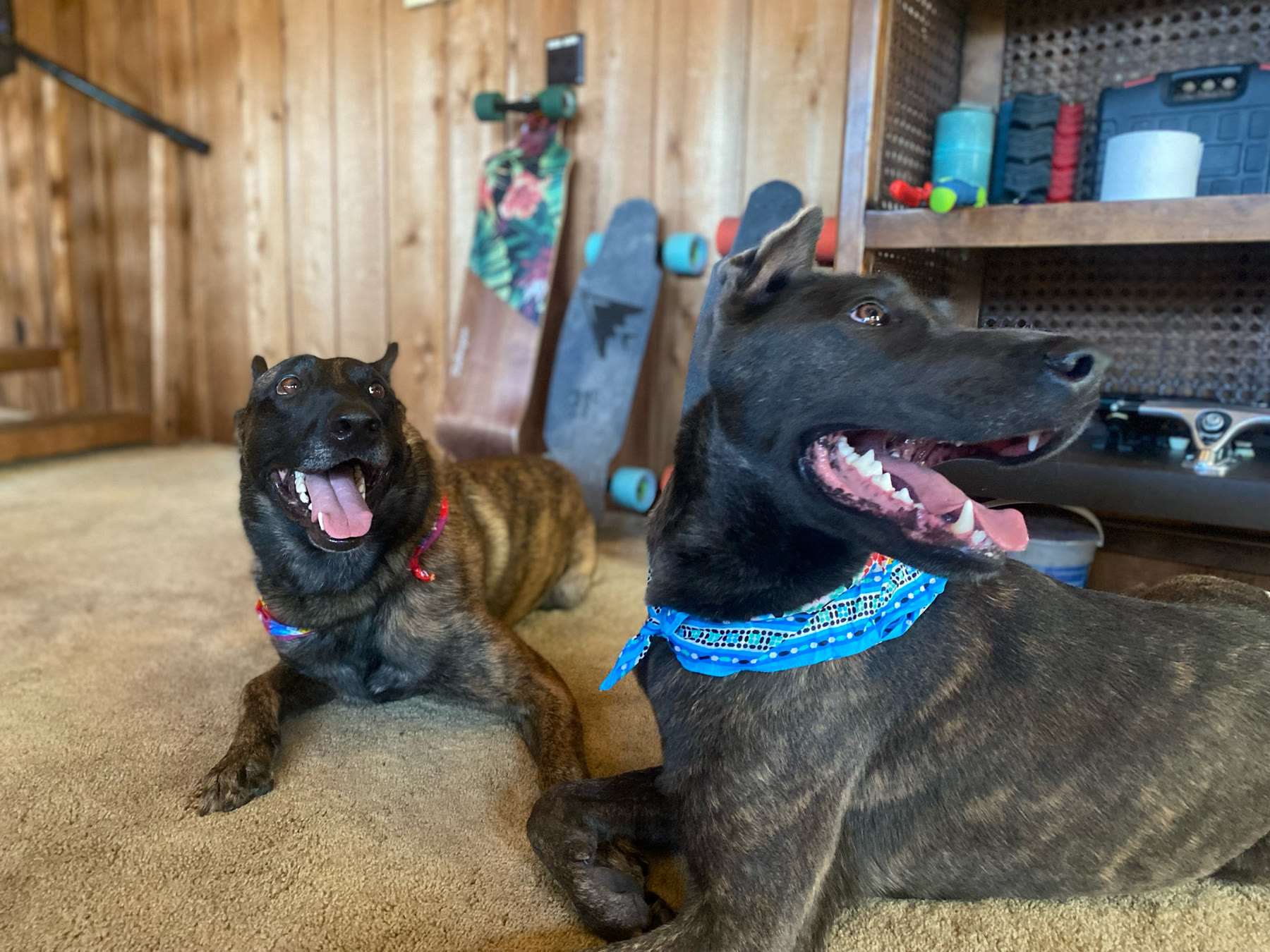
On the AKC's numbers the Doberman is the bigger breed. The top of a male Doberman's weight range sits 25 pounds above the top of the Dutch Shepherd's. A breed range is not a limit, though, and our own Dutch Shepherds sit at the top of the Dutch range and past it: Azul, our female, weighs 75 to 80 pounds, and Dabo, our male, weighs more than she does. Ask any breeder what both parents weigh.
Different jobs, different dogs
The two breeds were built for different work. The AKC traces the Doberman to Apolda, Germany, where a late-19th-century tax collector, night watchman and dog catcher named Louis Dobermann picked the strongest, steeliest and most intelligent dogs from his pound to help with his tax collecting. It was bred as a guard dog. In World War II, the AKC notes, the United States Marine Corps adopted it as its official war dog.
The AKC says the Dutch Shepherd was discovered as a naturally occurring shepherd's dog in the Dutch countryside and developed as an all-purpose farm dog: a farm guard, a drover and a livestock dog, and later a police dog. Its original duties included keeping flocks of sheep in one place, which is why, the AKC says, it is able to run all day. Our short history covers that story.
Temperament: the guardian and the shepherd
The Doberman's official standard asks for a dog that is "energetic, watchful, determined, alert, fearless, loyal and obedient," and tells judges to dismiss "any shy or vicious Doberman" from the ring. The AKC calls the breed one that "stands proudly among the world's finest protection dogs" and says the Doberman "should always live inside the home with his people, rather than outdoors."
The Dutch Shepherd's standard asks for "loyalty and reliability, alertness, and watchfulness," in a dog that is "active, independent, with persistence, intelligence, prepared to be obedient." The AKC's breed page is frank about the catch: the breed has "an independent nature" and "can be slightly obstinate and have a mind of its own."
Both are loyal and watchful. The Doberman leans protective guardian. The Dutch Shepherd leans independent worker that wants a task. Our temperament guide goes deeper on the Dutch side.
Ears and tails
This is the difference most buyers do not expect. The Doberman standard describes the ears as "normally cropped and carried erect" and the tail as "docked at approximately second joint." The American Veterinary Medical Association "opposes ear cropping and tail docking of dogs when done for cosmetic or nontherapeutic purposes" and encourages removing both from breed standards. If you want a Doberman, ask any breeder whether they crop and dock, and when.
The AKC's Dutch Shepherd standard goes the other way. Its ears are "medium sized, stiff, and erect," drooping or hanging ears are a disqualification, and "cropped or stump tail are disqualifications." Nothing in it calls for cropping or docking.
Health screening
The AKC says Dobermans are generally healthy but prone to bloat, a life-threatening digestive condition. Genetic conditions that can affect the breed, it says, include "hip dysplasia, dilated cardiomyopathy (enlarged heart), von Willebrand's disease (a clotting disorder), progressive retinal atrophy, albinism, and hypothyroidism." Its national breed club recommends a hip evaluation, a cardiac exam, an eye exam by a veterinary ophthalmologist, a thyroid evaluation and a DNA test for von Willebrand disease. For the Doberman, the Orthopedic Foundation for Animals' cardiac requirement "must include ECHO and HOLTER evaluations."
The AKC calls the Dutch Shepherd "generally a healthy breed," and credits Dutch breeding rules and the breed being lesser known. It says breeders should screen for hip dysplasia in all coat types, long-haired dogs for thyroid issues and rough-haired dogs for goniodysplasia. The national club recommends hip, elbow and eye evaluations.
For either breed, ask to see the results for both parents before you commit, and ask your veterinarian what they mean.
Exercise and training
The AKC calls the Doberman "an energetic athlete who needs a lot of exercise and free play," and says a large fenced area to run is vital. It says Dobermans "learn easily, respond quickly," but warns they are "very strong dogs and can become pushy, destructive, and unmanageable if not raised properly," so socialization from puppyhood and obedience training are a must.
The Dutch Shepherd, in the AKC's words, "has been bred for hard work, and plenty of it," and "does not want to be a pet left at home; they want to be your partner in life." It "does better with shorter training sessions (with little repetitions)," and without training "will become very independent and will start to make its own decisions." The good news is the off-switch: the breed "will differentiate between work, play, and chill time."
Both breeds shine in dog sports. The AKC names obedience, tracking and agility for the Doberman, and herding, scent detection, tracking, IPO, obedience and agility for the Dutch Shepherd. Our guide to dog sports covers how to start.
Grooming
The AKC calls the Doberman "mostly a 'wash and wear' breed": a quick daily going-over with a short-bristled brush or grooming mitt, nails trimmed at least monthly and ears wiped every few days. A short-coated Dutch Shepherd needs only occasional brushing, switching to daily brushing during the spring and fall sheds. Long and rough Dutch coats take more work, covered in our coat guide.
Which dog fits which home
- Lean Doberman if you want a classic guardian that stays close to its family, you are ready for daily exercise and early obedience work, and you have looked into the breed's heart screening.
- Lean Dutch Shepherd if you want an athletic partner with natural ears and tail, you enjoy training rather than tolerate it, and you will give the dog a job every day.
- Choose neither if you want a dog that is fine alone all day. The AKC's descriptions of both breeds point the other way.
Weighing other shepherds too? Read our honest comparisons with the Malinois and the German Shepherd, then work through our ten honest questions.
Sources
- American Kennel Club: Doberman Pinscher breed page (size, life expectancy, colors, group, 1908 recognition, popularity rank, health, recommended tests, grooming, exercise, training, origin)
- American Kennel Club: Official Standard of the Doberman Pinscher (PDF, approved February 6, 1982; temperament, coat, colors, ears, tail)
- American Kennel Club: The Doberman Pinscher's history (Denise Flaim, updated March 22, 2024; Louis Dobermann, Apolda, US Marine Corps war dog)
- American Kennel Club: Dutch Shepherd breed page (size, life expectancy, origin, temperament, health, recommended tests, grooming, exercise, training, AKC status)
- American Kennel Club: Official Standard for the Dutch Shepherd (PDF, effective January 1, 2017; temperament, ears, tail)
- American Kennel Club: Board of Directors meeting minutes, September 15-16, 2026 (PDF; Dutch Shepherd Stud Book entry June 30, 2027)
- Orthopedic Foundation for Animals: Doberman Pinscher CHIC requirements (cardiac evaluation with echo and Holter)
- American Veterinary Medical Association: Ear cropping and tail docking of dogs (policy)
- Associated Press via ABC7: Doberman pinscher named Penny wins best in show (February 4, 2026; 150th Westminster Kennel Club Dog Show)