It's the question we get more than any other: "Is a Dutch Shepherd basically a Malinois?" Short answer: close cousins, different package. If you're deciding between the two breeds — or you researched the Malinois and got scared off — here's the honest version, without the marketing gloss.
Shared roots
Both breeds descend from the same population of continental herding dogs that worked farms across the Low Countries in the 1800s. When breed standards were written in the 1890s, the dogs were sorted largely by coat and color: brindle dogs became Dutch Shepherds, solid fawn and other colors became the Belgian varieties. Underneath, they were siblings — literally, in some litters.
That shared ancestry never really ended. In the Dutch KNPV program — the proving ground that supplies police and military dogs worldwide — Dutch Shepherd and Malinois lines have been bred side by side for over a century, selected for one thing: the ability to do real work. That's why a working-line Dutch Shepherd has far more in common with a working-line Malinois than either has with a show-line dog of its own breed.
What's actually different
Looks and rarity
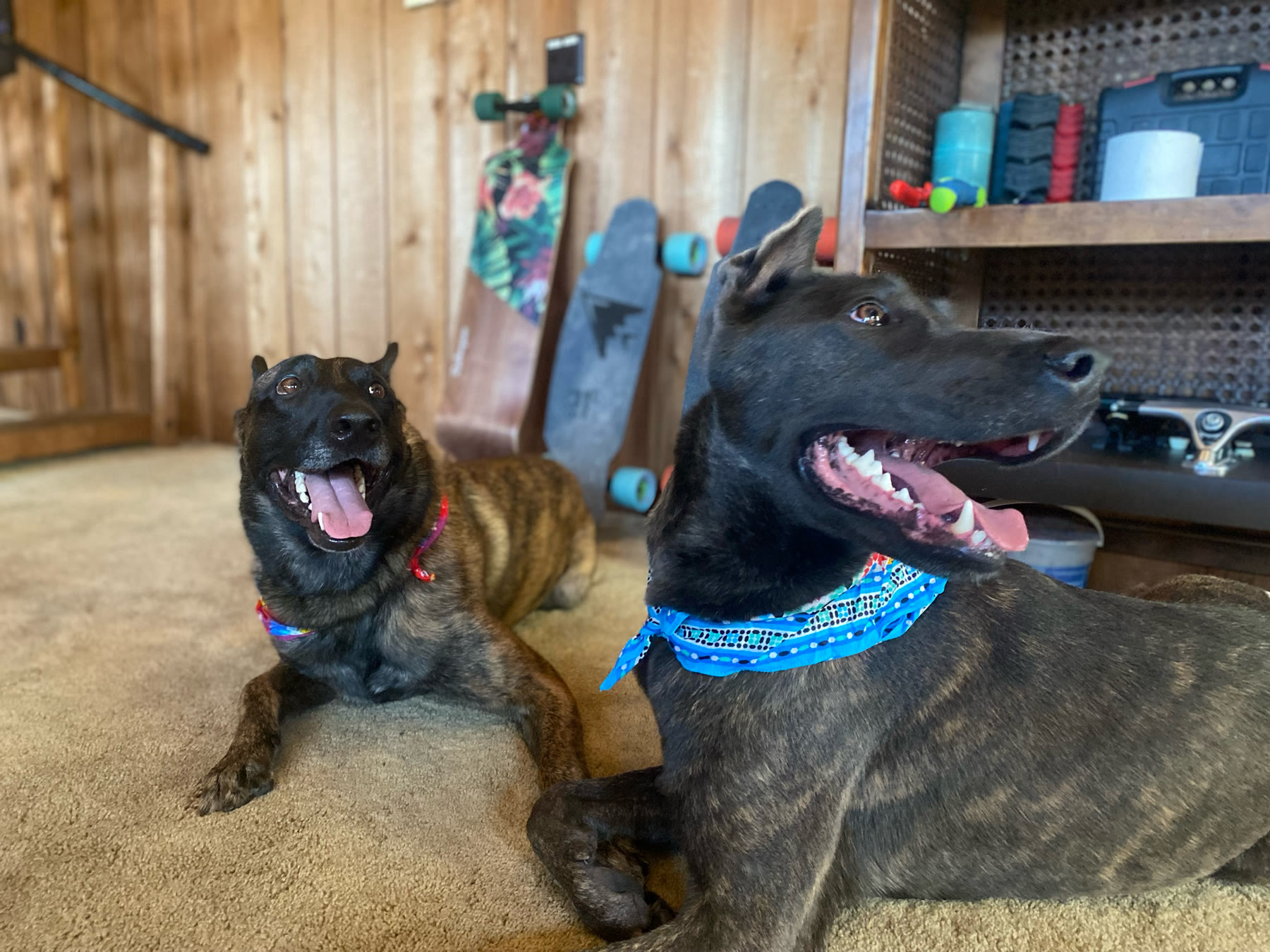
The obvious one: Dutch Shepherds are brindle — gold or silver base with black striping — and they're much rarer. The Malinois exploded in popularity after years of military fame and Hollywood appearances; the Dutch Shepherd stayed a working insider's dog. Rarity cuts both ways: fewer backyard-bred Dutchies with bad nerves, but also fewer litters, longer waits, and more homework to find a good one.
Temperament tendencies
Here's the distinction that matters for your household. Well-bred Dutch Shepherds tend to carry a notch more "off-switch" — the ability to work hard when asked and genuinely settle in the house afterward. Malinois lines, especially sport-bred ones, tend to run hotter: more constant motion, more anxiety when under-worked, and a famously high rate of ending up in rescue because an owner bought the military mystique and got the intensity that comes with it.
That said — and this is the part most breed comparisons skip — a Dutch Shepherd is not a low-drive Malinois. A KNPV-line Dutchie without a job will invent one, and you will not like the job it invents. The difference between the breeds is a matter of degrees, not categories. Individual genetics matter more than the breed label: a stable, clear-headed Malinois from a careful breeder is a better family prospect than a nervy Dutch Shepherd from a careless one.
Availability of quality
Because the Malinois market is enormous, quality varies wildly — everything from world-class working dogs to poorly-bred pets sold on hype. The Dutch Shepherd pool is smaller and still dominated by working breeders, which keeps average quality higher but means you'll likely join a waitlist rather than pick from a litter on the ground.
Which one is right for you?
- Choose a Malinois if you're a serious sport competitor or professional handler who wants maximum drive and can channel it every single day.
- Choose a Dutch Shepherd if you want a genuine working partner — sport, protection, SAR, scent work — that can also live as a sane member of an active household.
- Choose neither if what you actually want is a companion for walks and weekends. There are wonderful breeds for that life; these aren't them.
Where our dogs fit
Our program pairs two KNPV bloodlines: Dabo from the Big Roy line and Azul from the Wibo line — drive and nerves from the sire's side, structural soundness and temperament depth from the dam's. You can read more about both on our lineage page, or dig into what KNPV actually is if the acronym is new to you.