A puppy changes fast. In the first year or so, most puppies go through two fear periods, trade their baby teeth for 42 adult teeth, and hit a teenage phase. Here is what AKC experts and veterinary behaviorists say changes from 8 weeks to 1 year, and what to work on at each stage.
An honest note: with this breed, the first year is a lot of work. On the AKC's trait scales, the Dutch Shepherd scores 5 of 5 on energy level, the "High Energy" end, and 5 of 5 on mental stimulation needs, the "Needs a Job or Activity" end. The good news: it also scores 5 of 5 on trainability, the "Eager to Please" end.
Every age below is a guideline. The AKC says key milestones vary with your dog and your surroundings, and where its own articles disagree, we say so.
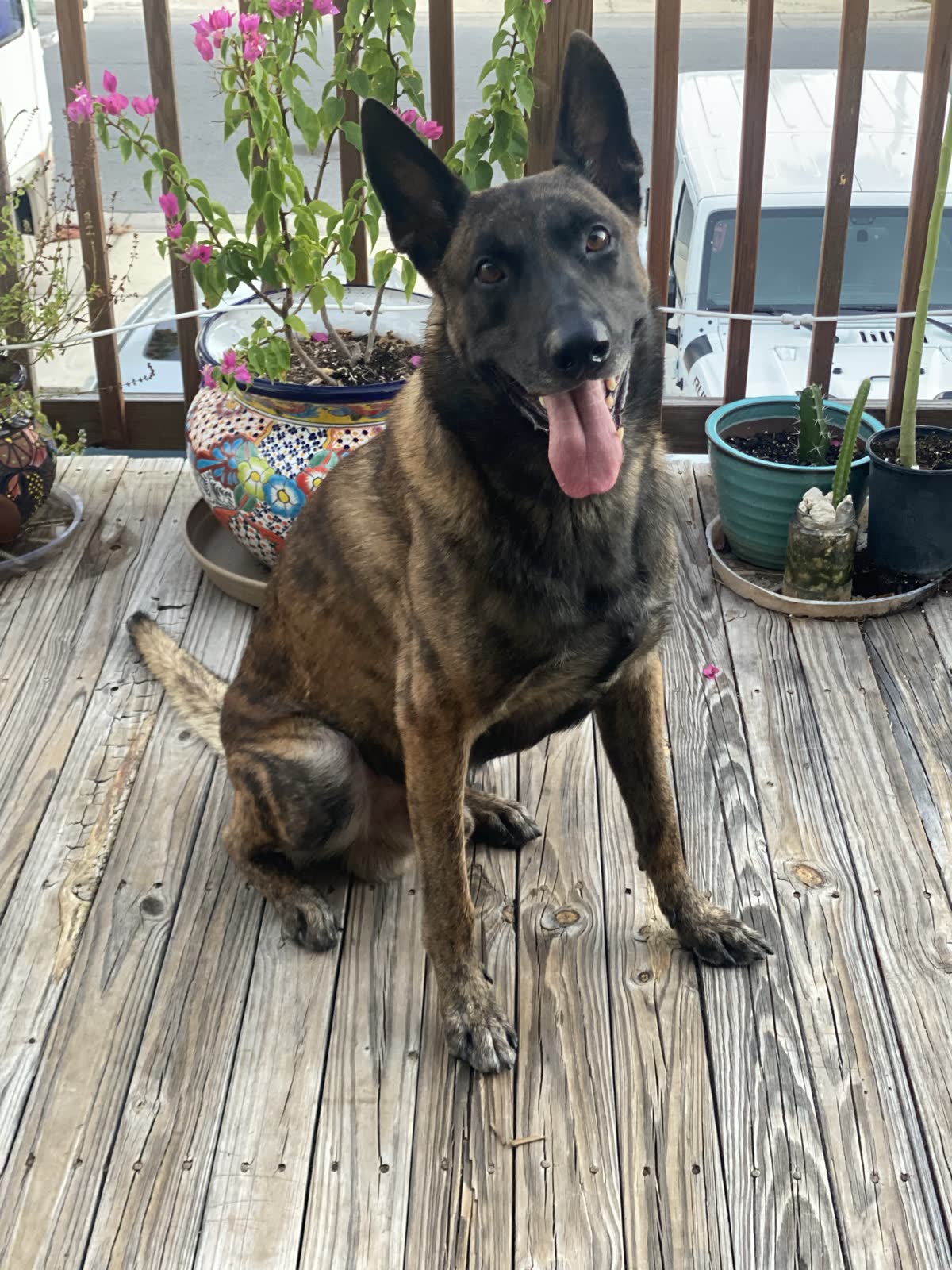
8 to 12 weeks: the first fear period
What changes: the AKC says puppies generally go through a first fear period around 8 to 11 weeks. Its growth timeline gives 8 to 12 weeks. It happens right around the time puppies are coming home, and a confident puppy can turn spooked seemingly overnight. That is normal, and the AKC says no amount of socialization can prevent it.
This is also the socialization window, and the sources differ on its length. The AKC's fear-period guide says it runs from approximately 3 weeks to 12 to 14 weeks. The AKC's training timeline, drawing on trainer Kate Naito, says it ends by 16 weeks. The American Veterinary Society of Animal Behavior (AVSAB) calls the first three months the most important time. It starts with the breeder, so ask any breeder what the puppies met before eight weeks.
What to work on:
- Gentle exposure. Naito suggests traffic noise, car rides, passersby of all ages and shapes, other dogs, vet visits and body handling. "The goal is to teach a puppy that the world is a fun, not scary, place," she says.
- Never force it. If something scares your puppy, the AKC says to let it move away, reward it for looking, and let it choose how close to get. Forcing a puppy toward what frightens it "can increase fear and create negative associations."
- A first cue. Naito says most new owners start with sit, and that this training can start as soon as your puppy comes home, as early as eight weeks, provided you plan to use positive-reinforcement training.
- Potty and crate routines. Under the AKC's month-plus-one rule, your puppy's age in months plus one is the most hours it should be able to comfortably hold it between potty breaks: 4 hours at 3 months. See our house-training and crate training guides.
- The vet and puppy class. The AVSAB says puppies can generally start socialization classes as early as 7 to 8 weeks, after at least one set of vaccines given at least 7 days before the first class, plus a first deworming. Ask your veterinarian about vaccine and deworming timing.
3 to 4 months: curious, and the teeth start to go
What changes: starting around 12 weeks, the AKC says, a puppy is less fearful and becoming more curious and independent. At about 3 to 4 months, the baby teeth begin to fall out. You might notice drooling or little spots of blood on toys. If anything looks unusual, the AKC says to talk to your veterinarian, since both could also point to a more serious issue.
What to work on:
- Chew toys within reach. Rubber teething toys you can freeze, edible puppy teething rings and flavored puppy chew toys can all be good options, the AKC says. Always supervise chewing. See our chewing guide.
- A soft mouth. The AKC's teething guide says now is the time to teach bite inhibition, how to moderate the force of a bite. When teeth land on fingers or toes, offer a toy instead, and stop the game if the nipping continues. See our puppy biting guide.
- Short walks. The AKC's puppy exercise guide cites veterinary researchers who recommend walks of about five minutes for every month of age, once or twice a day, depending on the speed of the walk and the time you have. At 4 months, that is about 20 minutes. More in our exercise guide.
- School. The AKC's growth timeline says that by 16 weeks a puppy is ready for training classes and some basic commands like come. (The AVSAB says classes can start earlier.) See our recall guide.
4 to 6 months: adult teeth and real progress
What changes: the permanent teeth keep coming in, which the AKC's growth timeline sums up as "chewing, chewing, and more chewing." By 6 months, the AKC says, the baby teeth should have fallen out. AKC Chief Veterinarian Dr. Jerry Klein: "If you find that some don't fall out, be sure to tell your veterinarian. They may need to be removed by a veterinary professional."
What to work on: the AKC's training timeline, written with Naito's input, sets these goals by 6 months:
- Polite play. Knowing when to stop, a "drop it" cue, and that your body and clothing are not toys.
- House-training progress. Naito expects steady progress, though it may take several months. Dr. Klein says that if training begins early, a 6-month-old puppy "is usually able to be depended on most of the time to eliminate outside." If you are not making progress, he says to have the puppy checked by a veterinarian, since a urinary tract infection or other health issue may be causing the delay.
- Time alone. Coping with short stretches in a crate or another safe, enclosed place. See leaving a Dutch Shepherd home alone.
- Recall. "Even if your puppy doesn't have a rocket recall, the important thing is that he loves coming right up to you," Naito says.
6 to 9 months: the teenager arrives
What changes: the AKC's growth timeline calls 6 to 12 months life with a teenaged dog: dogs this age "start to test boundaries" and "need a great deal of stimulation and activity." Another AKC article says adolescence is individual to each dog but "may begin when he's about eight months old and continue until he's two years old."
Most puppies also go through a second fear period, between approximately 6 and 14 months, the AKC says. It can be especially disorienting for owners because a dog this age "may look like an adult dog."
What to work on:
- Freedom in small steps. The AKC calls too much freedom too soon a common mistake: as a puppy grows more confident, it will likely stop staying close by. Keep the crate as a safe place to relax.
- Keep practicing. The AKC suggests working on the basics several times a week and rewarding good choices, especially unprompted ones. Meet new fears with the same steps as before: let the dog move away, reward curiosity, keep sessions short.
- Brain work. Mental stimulation is "particularly important for adolescent dogs with a lot of energy," the AKC says, suggesting games, trick training and puzzle toys. See Brain Work for six games.
- Still no jogging. The AKC's puppy exercise guide says to hold off on jogging or running on a leash until 12 months for medium breeds and 12 to 18 months for large breeds, and to restrict repeated jumping, which can injure a puppy's back. The AKC calls the Dutch Shepherd a medium-large breed, so go by the large-breed range and ask your veterinarian.
9 to 12 months: nearly grown, still learning
What changes: more chewing. The AKC describes "a secondary chewing phase between 8-to-10 months that occurs as the adult teeth settle in the jaw," so keep the house puppy-proofed and chew toys in easy reach.
What to work on: by one year, the AKC's training timeline says, dogs should be making progress on the polite behaviors they will need for life. Naito says the basics vary with your dog and your environment, but typically include sit, down and stay (even with distractions), come when called (particularly off-leash), loose-leash walking, and drop it and leave it.
Keep at it with this breed. The AKC warns: "Without training, this breed will become very independent and will start to make its own decisions, so obedience training is highly recommended."
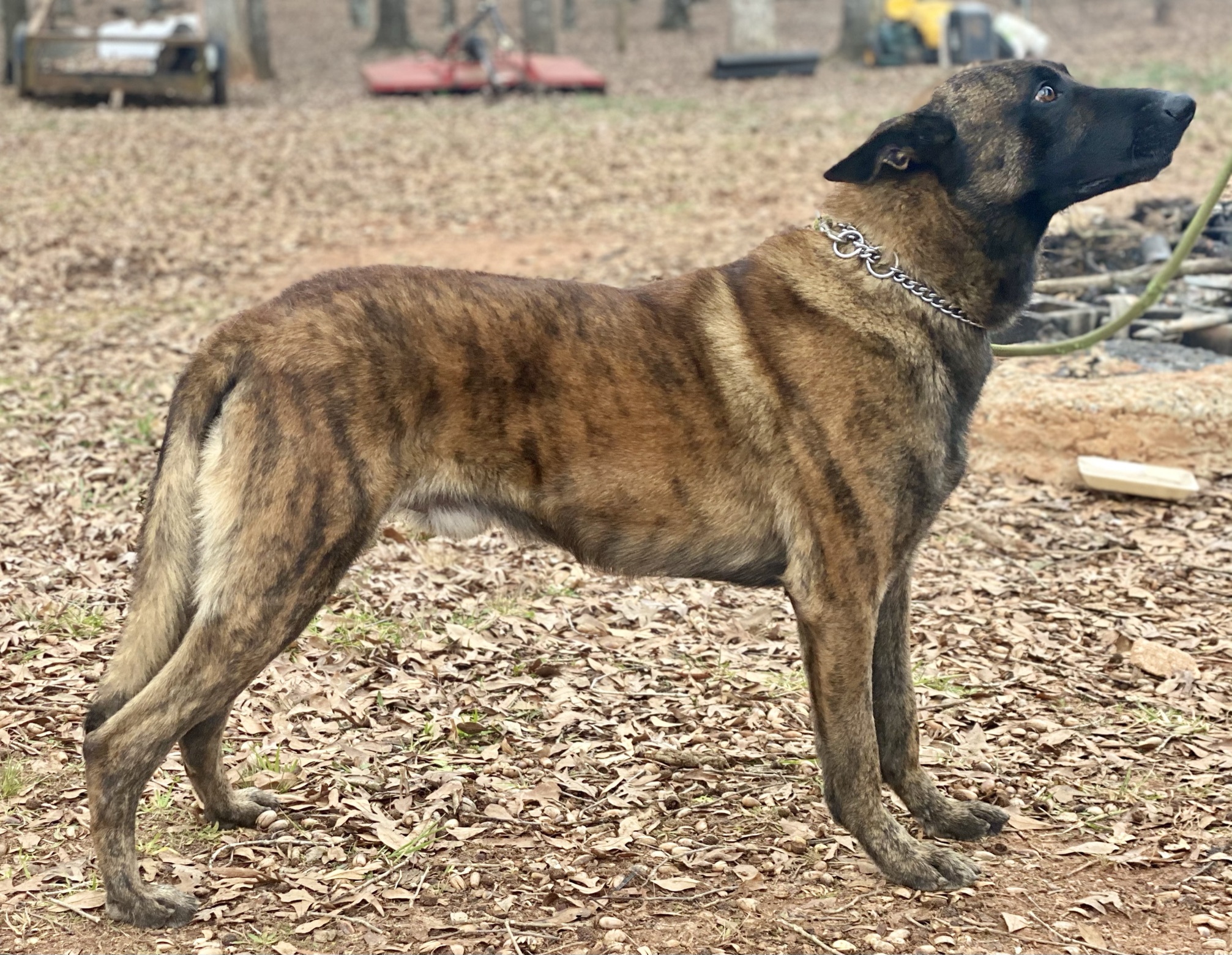
After the first year: when is a Dutch Shepherd full grown?
Maybe not by its first birthday. The AKC calls the Dutch Shepherd a medium-large breed. One AKC article says small breeds reach adult size at about 12 months, "while larger dogs may not reach physical maturity until they're 18 to 24 months old." Another says most dogs reach emotional maturity between 12 and 18 months, and that larger breeds can take longer. For adult height and weight ranges, see how big a Dutch Shepherd gets.
Still deciding on the breed? Work through our ten honest questions.
Sources
- American Kennel Club: Dutch Shepherd breed page (Energy Level, Mental Stimulation Needs and Trainability Level scores; medium-large breed; training)
- American Kennel Club: Puppy Training Timeline: Teaching Good Behavior Before It's Too Late (Mary Kearl, with trainer Kate Naito, updated Oct 15, 2026; the window to 16 weeks, exposure, first cues, goals by 6 months and by one year, milestones vary)
- American Kennel Club: What Are Puppy Fear Periods? (Sassafras Patterdale, updated Oct 15, 2026; socialization period, both fear periods, not forcing, training steps)
- American Kennel Club: A Puppy Growth Timeline: Transitions in Puppyhood (Jan Reisen, updated Mar 23, 2026; 8 to 12 weeks, 12 to 24 weeks, 16 weeks, the teenaged dog, emotional maturity)
- American Kennel Club: Puppy Teething and Nipping: A Survival Guide (Harriet Meyers, with AKC Chief Veterinarian Dr. Jerry Klein, updated Oct 15, 2026; teething ages and signs, chew toys, bite inhibition)
- American Kennel Club: Puppy Potty Training Timeline and Tips (Harriet Meyers, updated Aug 11, 2026; month-plus-one rule, Dr. Klein on the 6-month mark)
- American Kennel Club: How Much Mental and Physical Exercise Do Puppies Need? (Elaine Waldorf Gewirtz, updated Mar 8, 2024; five minutes per month of age, jogging ages by size, repeated jumping)
- American Kennel Club: Your Adolescent Puppy and Changes to Expect (Breanne Long, updated Apr 3, 2024; adolescence, freedom, crate, practice, secondary chewing phase, mental stimulation)
- American Kennel Club: How Long Does Puppyhood Last? (Jan Reisen, published Oct 22, 2021; adult size and physical maturity by size)
- American Veterinary Society of Animal Behavior: Position Statement on Puppy Socialization (PDF; the first three months, class start age, vaccines and deworming before class)