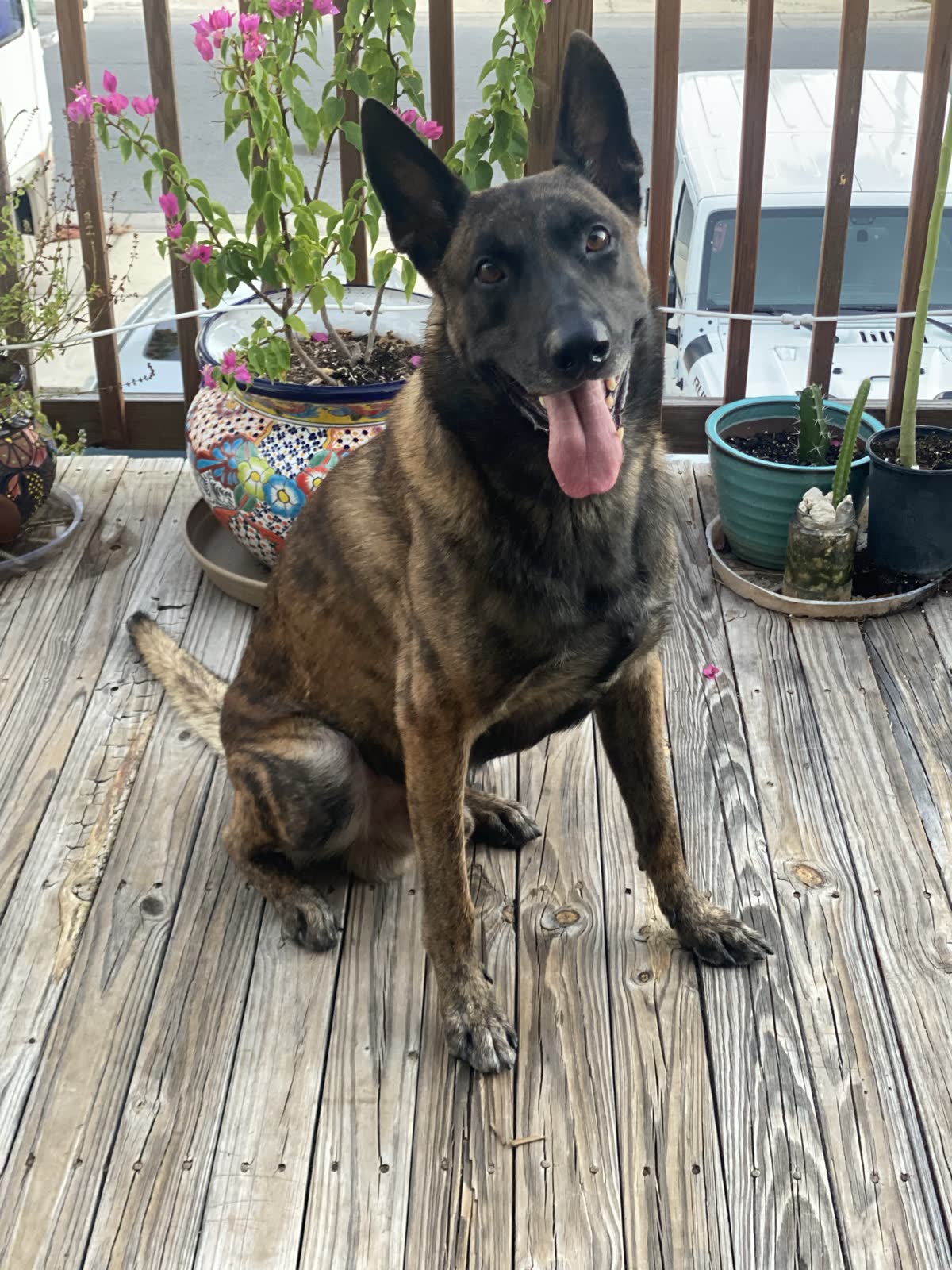
A crate can sound like a cage. The AKC sees it differently: "Although you might see it as caging your dog, in truth, dogs can learn to love their personal den." The catch is that a Dutch Shepherd is not a dog you can park. The AKC's breed page says this breed "does not want to be a pet left at home; they want to be your partner in life." So the goal is a crate your puppy walks into on its own, used for rest and safety, never as storage. Here is how the AKC and Humane World for Animals say to get there.

Why crate train at all
Trainer Rachel Lane, quoted by the AKC, calls it a life skill, because almost every dog ends up in a crate at some point: "If they are ever at the vet, with a dog sitter, at a boarding facility, or have to evacuate during a natural disaster, they're going to end up being in a crate, at least for a little while." A dog that already knows how to relax in one can be less stressed when that day comes.
- It protects the house and the puppy. A crate keeps an unsupervised puppy away from your furniture and your socks, and Lane adds that well-rested puppies tend to chew less (AKC)
- It helps with potty training, because a puppy in a crate can't have accidents around the house (AKC). Our house-training guide covers the schedule
- It gives your dog a quiet place when guests come over or a party gets loud (AKC)
- It is a safe way to travel in the car (Humane World)
Picking the crate
- Size: just large enough for your puppy to stand up, turn around and lie down comfortably. Too big, and the AKC says a puppy can potty in one end and sleep in the other. Buy for adult size with a divider, so the crate can "grow" with your dog
- Style: some dogs prefer a wire crate so they can see out, and others settle better in a darker, den-like one, such as a crate with a removable cover (AKC). Humane World lists plastic "flight kennels," fabric crates on a rigid frame, and collapsible metal pens
- Place: Humane World starts the crate in a room where the family spends a lot of time, like the family room. Both sources want a calm spot, not the middle of the action
- Bedding: the sources differ here. Humane World says to put a soft blanket or bed in the crate. The AKC is more careful with puppies, because many prefer to potty on soft surfaces, and suggests waiting until your puppy stops having accidents and shredding fabric
The four steps
Humane World says crate training can take days or weeks, depending on a dog's age, temperament and past experiences. Its two rules: the crate should always mean something pleasant, and training happens in small steps. "Don't go too fast."
1. Introduce the crate. Prop the door open and secure it, so it can't hit and frighten your puppy. Drop small treats near the crate, then just inside the door, then all the way in. Don't force it. Humane World says this step may take a few minutes or several days. The AKC's version: sit next to the crate with a handful of food, toss a treat in whenever your puppy goes near it, and keep a treat coming every 5 to 10 seconds while your puppy stays inside. Lane also suggests hiding a few treats inside when your puppy isn't looking, so it finds a surprise there later.
2. Feed meals in the crate. Put the bowl as far back as your puppy will go without worry, and a little further back each meal. Once your puppy eats comfortably inside, close the door during the meal and open it as soon as the bowl is empty. Each meal, leave it closed a few minutes longer, until your puppy stays about 10 minutes after eating. Whining may mean you went too fast, so make the next one shorter (Humane World).
3. Practice while you're home. Use a cue like "crate," give a treat and close the door. Sit quietly nearby for 5 to 10 minutes, step into another room for a few minutes, come back, sit again, then let your puppy out. Repeat several times a day, stretching both times. When your puppy stays quiet for about 30 minutes with you mostly out of sight, you can start short trips out and nights in the crate (Humane World). Short sessions suit this breed: the AKC says the Dutch Shepherd does better with shorter training sessions.
4. Leave the house, and start nights. Humane World says to crate your puppy anywhere from 5 to 20 minutes before you leave, varying the moment in your routine. Keep goodbyes short and matter-of-fact, and keep homecomings low-key. Keep crating for short spells while you're home too, so the crate doesn't only mean being left alone. At night, Humane World starts the crate in your bedroom or a nearby hallway, because puppies often need to go out at night and you'll want to hear them. Move it later, gradually, if you want to.
Before every crate session
- Potty and exercise first. The AKC wants those needs met before the door closes. With a high-energy breed this matters, so see our exercise guide for how much a growing puppy needs
- Crate a calm or sleepy puppy, not a wound-up one (AKC)
- Give a food-stuffed chew toy every time, frozen so it lasts longer, and provide water (AKC). More ideas in Brain Work
- Take the collar off. The AKC says to do it every time, for safety
- Leave a crated dog alone. Humane World asks everyone, especially kids, not to poke fingers through the bars, tap the sides or bother a dog inside. It's the dog's safe zone. More on that in working dogs and kids
How long is too long?
Humane World says puppies under 6 months shouldn't stay in a crate more than three or four hours at a time, because they can't hold it that long. Its FAQ also gives a "months plus one hour" rule for puppies. As in our house-training guide, when rules disagree, go by the shorter one. For adult dogs, its guideline is no more than 4 to 5 hours during the day. The AKC's trainer adds two limits that apply at any age: never longer than your dog is comfortable, or longer than it can hold its bladder.
If your day runs longer, the AKC suggests a dog sitter or walker, doggy daycare, or a puppy-proofed space such as a playpen or a gated kitchen. Humane World puts the crate's place in a dog's life plainly: "just as you would not spend your entire life in one room of your home, your dog shouldn't spend most of their time in a crate." As your dog stops having accidents and chewing things when alone, it can graduate to a room like the kitchen, then the whole house.
Whining, and when not to crate
The AKC says the timing tells you a lot. Whining that starts within minutes of going in is likely stress, so go back a step and make the crate a better place. Whining after your puppy has been settled for a while more likely points to boredom, hunger, or a bathroom need. Humane World adds: never punish your dog for whining.
Night whining is where the sources differ. Humane World says that if your puppy has never been let out of the crate for whining, you can try ignoring it for several minutes. If it keeps up, say the phrase your puppy knows for going potty, and if it perks up, go straight out to the usual spot. "This should be a trip with a purpose, not playtime." The AKC says never to leave a dog to "cry it out." Where they agree is pace: Humane World says gradual training makes whining less likely in the first place.
Stop and rethink if you see panic. The AKC lists pacing, shaking, scratching or biting at the door, long bouts of howling or barking, and drooling. A crate also won't fix separation anxiety: both sources warn that an anxious dog can get hurt trying to escape. The AKC suggests a larger puppy-proofed area instead and help from a professional trainer or behaviorist. And if your dog just avoids the crate, the AKC says a noisy door, or one that once swung shut on it, can be the reason. Try a different style, stop using the crate for a while, and go back to tossing treats in with the door open.
Planning the first year? Read our guide to the socialization window and The Off-Switch.
Sources
- American Kennel Club: Dutch Shepherd breed page (Energy Level 5 of 5, a partner rather than a pet left at home, shorter training sessions)
- American Kennel Club: Everything You Need to Know About Crate Training Your Dog (updated Sep 21, 2026; Rachel Lane on the life skill, benefits, sizing and dividers, crate styles, bedding, rewards, chew toys and water, collar off, time limits, whining, signs of panic, separation anxiety, reluctant dogs)
- Humane World for Animals: How to crate train your dog or puppy (crate types and placement, bedding, the four steps, departures and nights, time limits and the FAQ's months-plus-one rule, kids and the crate, graduating from the crate, whining at night, separation anxiety)