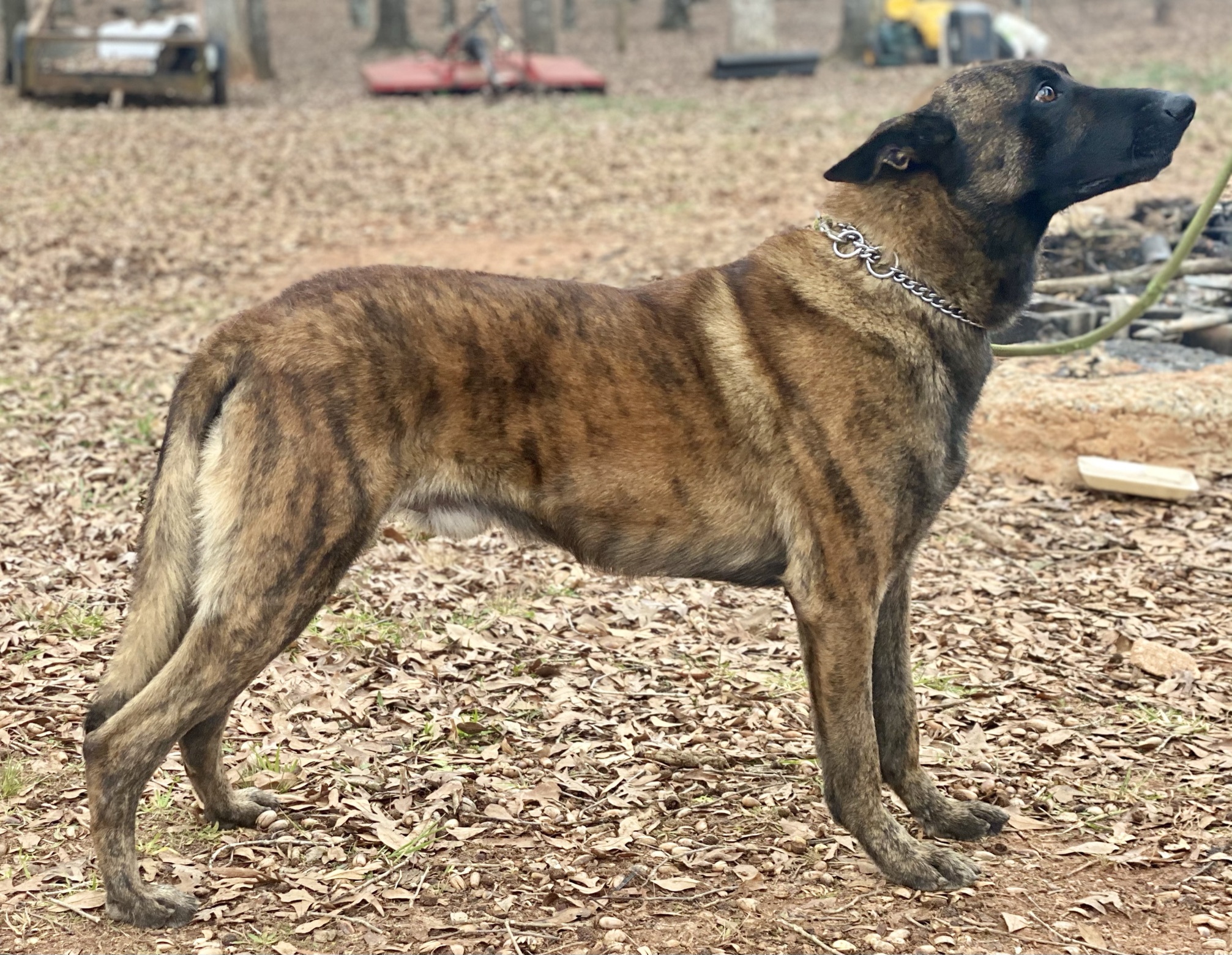
The AKC calls coming when called, or recall, "one of the most important skills your dog can learn." It also says a reliable recall "is more than convenient, it's potentially lifesaving." With a Dutch Shepherd there is one more reason to start early. The AKC's breed page says that without training, this breed "will become very independent and will start to make its own decisions." So the goal is a dog that turns and runs to you because coming to you is the best deal around. Here is how the AKC says to build that, plus what Humane World for Animals says about why dogs take off.
What "reliable" means
The AKC defines a reliable recall as being "99.99% sure" your dog will enthusiastically come when called, and is honest about the limit: "Dogs aren't robots, so there is never a guarantee that they will listen to your cue." Its step-by-step guide says the same thing: "even the best-behaved dog won't be 100% perfect."
- The leash stays on until you're sure. The AKC says there's no rule that you ever need to let your dog off-leash, and that keeping your dog leashed while you work on it is "the far more responsible option"
- Off-leash only where it's safe. The AKC says to let your dog play off-leash only in safely secured areas and to practice recall inside that safe perimeter
- Leash laws still apply. No matter how strong the recall, the AKC says to respect all local leash laws, which can apply even in unfenced parts of your own yard
Two words to teach before "come"
The AKC's step-by-step guide starts with two other words.
1. Your dog's name, meaning "pay attention to me." Start on leash or in a small, quiet room. Wait until your dog is looking at anything other than you, then say its name in a happy, excited voice. The moment your dog turns to look, mark it with a clicker or a marker word like "yes," then praise and give a favorite treat. Once your dog looks every time, add distractions, like other people in the room or toys on the ground.
2. "Gotcha," meaning a hand on the collar is good news. The AKC notes that most dogs dart away when you reach for the collar, and in an emergency you need to get hold of your dog. Lure your dog in with a great treat and let it lick or nibble, but don't hand it over yet. Say "gotcha," slowly and gently take the collar, then let your dog have the treat. Over time, make the grabs faster and firmer, then wait to give the treat until after you have hold. Practice in many places, and always pay with a treat. As the AKC puts it, "it's no good for them to come to you only to run away again as soon as you reach for them."
Training the recall, step by step
The AKC's key: be "the most exciting thing in your dog's environment." Start somewhere quiet, with your dog on leash, and use rewards your dog loves, like a game of tug or a piece of chicken. The AKC's other recall guide suggests high-value treats like chicken, cheese or freeze-dried beef liver.
- Start a few feet away. Say your dog's name, then "come," and make yourself interesting: pat your legs, clap, make kissy noises. As soon as your dog approaches, mark it, then praise and reward
- Add distance on the leash. Once your dog comes every time, let it wander to the end of the leash before you call
- Go off leash in a quiet room. Run backwards as you say "come." The AKC's line: "Dogs love a good chase." Then repeat in different rooms
- Ask for a sit on arrival, so your dog stays with you instead of bouncing off after the reward, and add a "gotcha" every so often
- Don't be stingy. Every recall earns praise, pets and play, plus a treat or toy (AKC)
The AKC's other guide adds a timing rule for when you first add the word: say your cue only when you are confident your dog is already moving toward you. Keep sessions short. The AKC's breed page says the Dutch Shepherd does better with shorter training sessions, with little repetition, and gets more driven as the work gets more mentally stimulating. Practice daily and raise the difficulty slowly, because the AKC warns that moving too quickly is likely to confuse your dog and may lead to less reliability.
Games that build a fast recall
The AKC says dogs often learn best through games, and to keep your recall cue "happy and light, not an authoritative tone."
- Catch Me: get your dog's attention, then run the other way with fun sounds. When your dog "catches" you, throw a party. The AKC's rule for this game: never chase your dog, not even here
- Find Me: once your dog has the basics, call from another room or a simple hiding spot, and reward big when it finds you. A good way to get kids involved
- Round robin: two or more people with treats stand apart and take turns calling your dog. The person who called pays when your dog gets to them
- Go and Come: toss a low-value treat like kibble, and as your dog nearly finishes it, call in an excited voice and pay with something better, like cheese or meat
- Recall Retrieve: if your dog loves fetch, say "come" as it runs back with the ball. The AKC says the next throw is often the best reward in itself
For more ways to work a busy mind, see Brain Work.
Taking it outside
Inside the house comes first, then small distractions: another pet in the room, someone cooking, a ball tossed in your hand. Then outdoors, where the AKC is blunt: "Even if they come 100% of the time indoors, outdoors is a whole new ballgame."
- Start outside on a 6-foot leash and repeat the steps (AKC)
- Graduate to a long line, 20 or 30 feet, slowly giving your dog more of that distance as you train. The AKC's other guide suggests a 15- to 20-foot line for bigger, busier places like a park
- The line is not for reeling in. In the AKC's words, it's "to control the situation." If your dog ignores you, gather the line as you walk closer, and try again
- If your dog keeps ignoring you, take several steps back in training and make sure you aren't asking for too much, too soon (AKC)
Our loose-leash walking guide covers the leash skills that go with this.
Habits that ruin a recall
- Calling only when the fun ends. If "come" always means leash on and home from the park, the AKC says your dog learns to link it with something it doesn't enjoy. Instead, call during play, pay well, then send your dog back to play
- Calling for unpleasant things. The AKC says to avoid calling your dog for unpleasant experiences, because it can weaken the response
- Repeating yourself. "Bailey, here! Here! Bailey, here! Here, Bailey! Bailey, here please!" is how the AKC describes a "poisoned cue," one the dog has learned to ignore. If you have to repeat it, the setting may be too distracting or the skill not solid yet. If your dog is busy with something exciting, the AKC says to go to your dog instead of calling over and over
- Punishing a slow recall. "Always, always praise a recall," even when your dog took its time (AKC). Humane World adds that punishing a dog after it has already left the yard "will probably make them afraid to come to you"
- Chasing. In an emergency, the AKC says chasing is likely to make your dog continue the "game" by moving away from you. Try running the other way instead
If the word is already ruined, the AKC's fix is to pick a new one, like "here" or "close," and start over from the beginning.
If your dog gets loose
The AKC's guide to runaway dogs starts with staying calm. Call in a cheerful, inviting voice, and use body language that draws your dog in, like bending slightly or turning your back. Don't chase. Many dogs treat it as a game or feel pressured and run farther. Keep your dog in sight, and a relaxed jog while you keep calling may help. If you spot your dog while driving and it's safe to stop, open the car door and invite your dog in cheerfully.
Prevention matters more. The AKC says dogs should only be off-leash in secure, enclosed areas, a collar should fit with two fingers underneath but no more, and every dog should wear up-to-date ID. A microchip is the backup if the collar comes off, as long as you keep your contact details current with the chip's recovery service.
Why dogs take off
Humane World for Animals says a dog may escape because it is bored and lonely. Two of the cases it lists: a puppy or adolescent under three with no other outlets for its energy, and a "particularly active type of dog," "like the herding or sporting breeds," that needs an active "job" to be happy. The AKC has assigned the Dutch Shepherd the Herding Group designation. Among Humane World's fixes: a daily walk, fetch, and a lesson every day of five to 10 minutes. Our exercise guide and dog sports guide cover the job side.
Planning the first year? Read our guide to the socialization window and our crate training guide.
Sources
- American Kennel Club: Dutch Shepherd breed page (without training, an independent dog that makes its own decisions; shorter training sessions; Herding Group designation)
- American Kennel Club: How to Train Your Dog to Come When Called: Step-by-Step Recall (Stephanie Gibeault, updated Mar 30, 2026; potentially lifesaving, the name game, "gotcha" collar grabs, the steps, distractions, 6-foot leash and long lines, never 100% perfect)
- American Kennel Club: How to Train a Reliable Recall for Your Dog (Sassafras Patterdale, updated Mar 27, 2026; "99.99% sure," leash and leash laws, adding the cue, high-value treats, Catch Me, Find Me and Hot Potato games, ending-the-fun mistake, poisoned cues, never punish a recall, don't chase)
- American Kennel Club: Want your Dog To Come When Called? Play a Game (AKC Staff, updated Jan 22, 2018; happy, light tone, Go and Come, Catch Me If You Can, Hide & Seek, Recall Retrieve)
- American Kennel Club: What to Do If Your Dog Gets Away From You (Hilarie Erb, updated Jun 18, 2026; staying calm, not chasing, the car door, collar fit, ID and microchips, unpleasant recalls, going to a busy dog)
- Humane World for Animals: How to Keep Dogs From Running Away (why dogs escape, active and herding types needing a job, daily lessons, punishment after the fact)