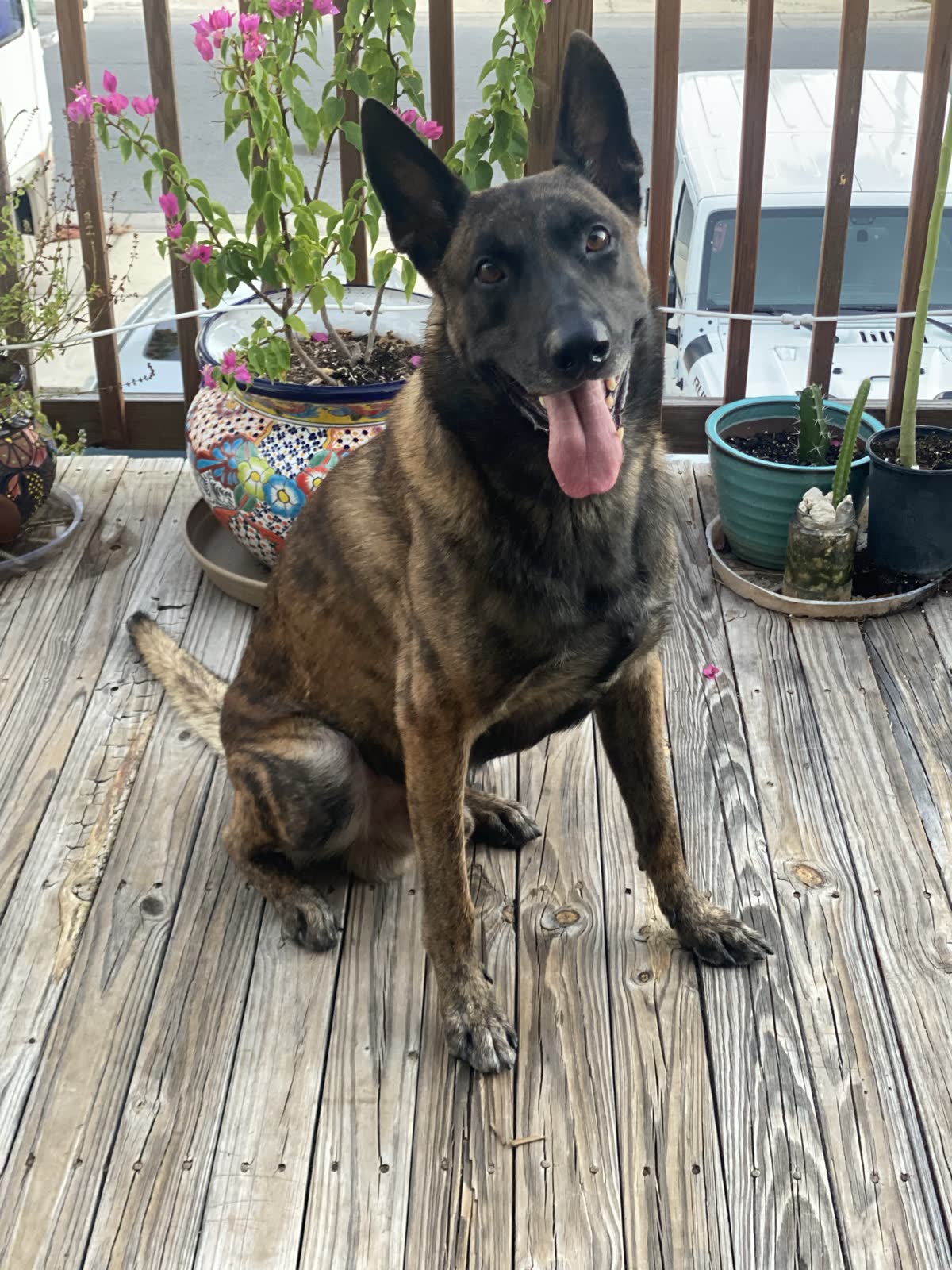
Color is one short section of the Dutch Shepherd's breed standard. The rest describes a whole working dog, from ear tips to tail. The AKC's official standard opens with the first impression it wants: "a medium-sized, middle-weighted, well-muscled dog of powerful and well-balanced structure." Here is what the AKC and FCI standards say, head to tail; what disqualifies a dog in the AKC's standard; and the quickest way to tell a Dutch Shepherd from a Belgian Malinois.
What a breed standard is
The AKC's breed page defines a breed standard as "A description of the ideal dog of each recognized breed, to serve as an ideal against which dogs are judged at shows, originally laid down by a parent breed club and accepted officially by national or international bodies." In the US, the American Dutch Shepherd Association has been the AKC Parent Club for the breed "since January 2016," and the AKC's standard took effect on January 1, 2017. The FCI's standard, N° 223, lists the Netherlands as the breed's origin.
The AKC standard also says how to weigh a flaw. Any deviation is a fault, and two factors serve as a guide to how serious it is: "1. The extent to which it deviates from the standard, 2. The extent to which such deviation would actually affect the working ability and welfare of the dog." In other words, the further a flaw strays from the standard, and the more it would get in the way of the dog's work or welfare, the more it counts.
The first impression
After that opening line, the AKC standard adds: "His carriage is natural and relaxed, but alert. He is a dog with lots of endurance, a lively temperament and an intelligent expression." It also says "The difference between sexes is clearly recognizable, especially in the shape of the head and build of body."
A Dutch Shepherd is a little longer than it is tall. The AKC standard sets length to height at "a 10 to 9 ratio," and the FCI standard puts it at "approximately" 10:9, "as suits a trotting dog." Heights by sex, and why neither standard sets a weight, are in our guide to how big a Dutch Shepherd gets.
The head
Both standards describe a head that is wedge-shaped, seen from above and in profile. The AKC's says "Size should be in proportion to the body." The skull is "flat and never rounded." Skull and muzzle are the same length: "equal in length" in the AKC standard, 1:1 in the FCI's. The bridge of the muzzle is "straight and parallel to the top of the skull."
- Eyes: "dark colored and medium size, set slightly oblique, almond shaped and not protruding."
- Ears: "medium sized, stiff, and erect." The FCI's version: "When the dog is alert, the ears are carried high and erect."
- Nose and lips: the nose is black, and the lips "should be tight and black, with no pink showing on the outside."
- Bite: a scissors bite in both standards. The AKC's adds: "A level, overshot or undershot bite is a fault."
The expression, in the AKC's words, "should be intelligent and lively, indicating alertness, attention and readiness for activity."
Body, tail and feet
The neck is "not too short, dry, without folds and gradually flowing into the body." Along the top, "The withers are slightly higher and slope into the back, which must be level, straight, and firm from withers to hip joints." The chest is "Deep and long, not narrow, ribs slightly sprung," and the belly has a "Slight tuck up."
The tail is one of the easier parts to read on a real dog. The AKC standard: "At rest, hangs straight down or with a slight curve. Reaches to the hock. In action, carried gracefully upwards, never curled or carried sideways." The FCI's says the same.
The feet are oval with arched toes, black nails and dark pads, front and back. The AKC standard says front dewclaws "are permissible." On the hind legs: "Dewclaws - none present."
Coat and color
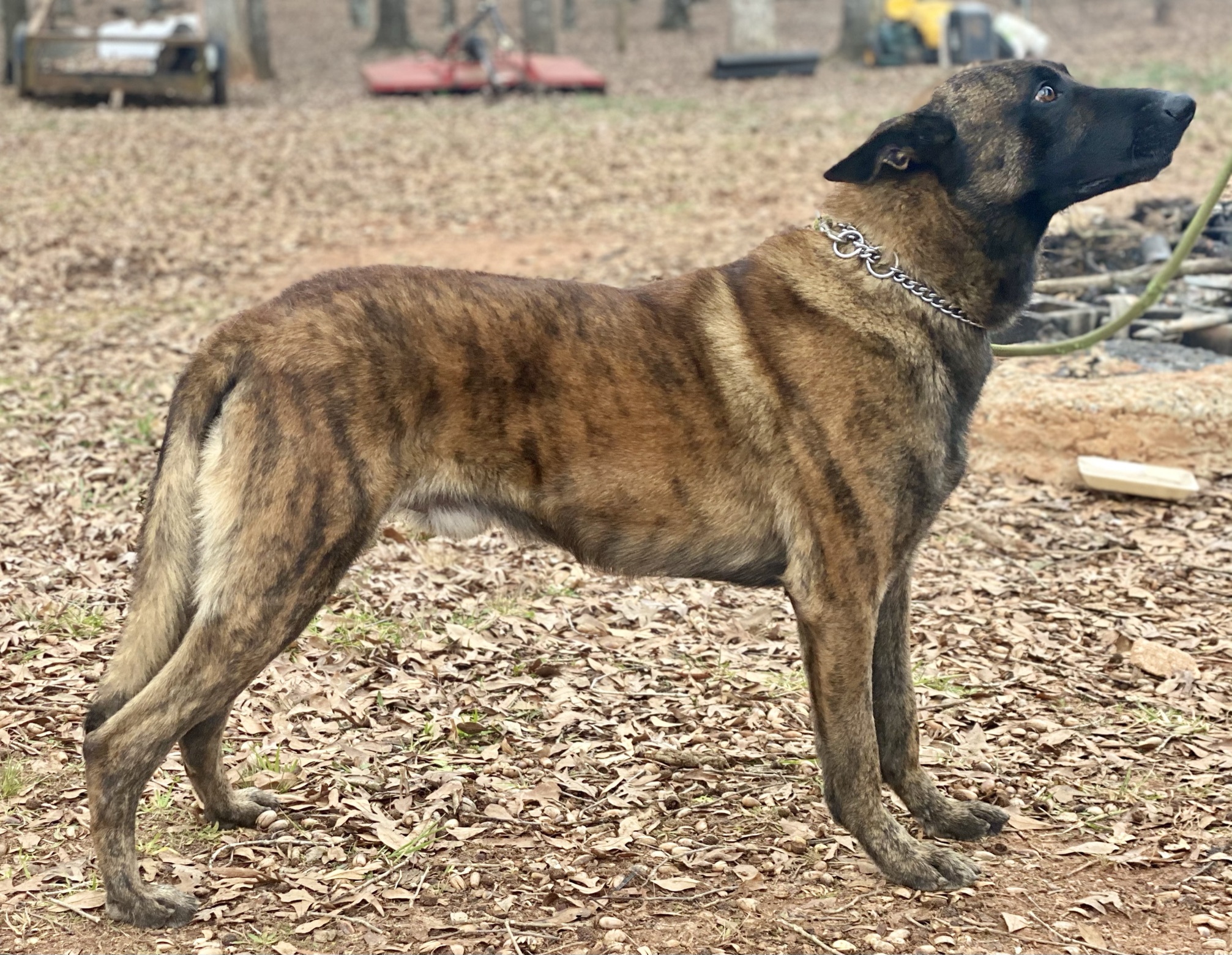
The AKC standard says "The breed is presented in three coat types, short-, long- and rough-haired," and the dog "is shown in natural coat without excessive grooming." All three share one color: "Brindle. The base color is golden or silver. Golden can vary from light sand color to chestnut red." The AKC standard adds that "Too much black is a fault" and "A black mask is preferred." Our brindle coat guide covers the three coats and what each one takes to groom.
What disqualifies a dog
The AKC standard closes with its list of disqualifications:
- "Males under 21 inches or over 26 inches. Females under 20 inches or over 25 inches."
- "Yellow or blue eyes."
- "Drooping or hanging ears."
- "Cropped or stump tail."
- "Solid white markings elsewhere than on tips of toes, chest, or frosting on muzzle."
Every item on the AKC's list is physical. The FCI's list is shorter and broader, and its first line is about temperament: "Aggressive or overly shy." The other two are "Any dog clearly showing physical or behavioural abnormalities" and "Lack of breed-type." Our temperament guide covers what the standards ask of the dog's character.
Dutch Shepherd or Belgian Malinois?
At a glance, a short-haired Dutch Shepherd and a Belgian Malinois can look alike. Read side by side, the two AKC standards give four clear differences:
- Color: the Malinois standard asks for "a rich fawn to mahogany, with black tips on the hairs giving an overlay appearance," and says "The blackening must not appear as patched or brindled." Of these two AKC standards, only the Dutch Shepherd's calls for brindle.
- Shape: the Malinois is "a well-balanced square dog," its length equal to its height. The Dutch Shepherd is a little longer than tall, at 10 to 9.
- Ears: the Malinois's are "rather small, set high and distinctly triangular." The Dutch Shepherd's are "medium sized."
- Coat: the Malinois standard describes one short coat and calls hair "too long, silky or wiry" a fault. The Dutch Shepherd comes in short, long and rough coats.
Color is a clue, not proof of parentage. Whatever breeder you talk to, ask to see both parents' registration papers. Our full Dutch Shepherd vs. Belgian Malinois comparison goes past looks into temperament and daily life.
Still deciding on the breed? Start with our ten honest questions.
Sources
- American Kennel Club: Dutch Shepherd breed page (breed standard definition, parent club)
- American Kennel Club: Official Standard for the Dutch Shepherd (PDF; approved January 11, 2016, effective January 1, 2017; general appearance through disqualifications)
- FCI-Standard N° 223: Hollandse Herdershond (Dutch Shepherd Dog) (PDF; origin, proportions, head, ears, tail, disqualifying faults)
- American Kennel Club: Official Standard of the Belgian Malinois (PDF; approved July 13, 2021, effective October 6, 2021; general appearance, size, ears, coat, color)