How big will it get? For a breed few people have met in person, that is a fair first question. The American Kennel Club lists the Dutch Shepherd at 21.5 to 24.5 inches tall and 42 to 75 pounds. Here is what sits behind those numbers: the male and female ranges in the breed standards, why neither standard names a weight, how the Dutch Shepherd stacks up against the Malinois and the German Shepherd, and when a puppy finishes growing.
The short answer
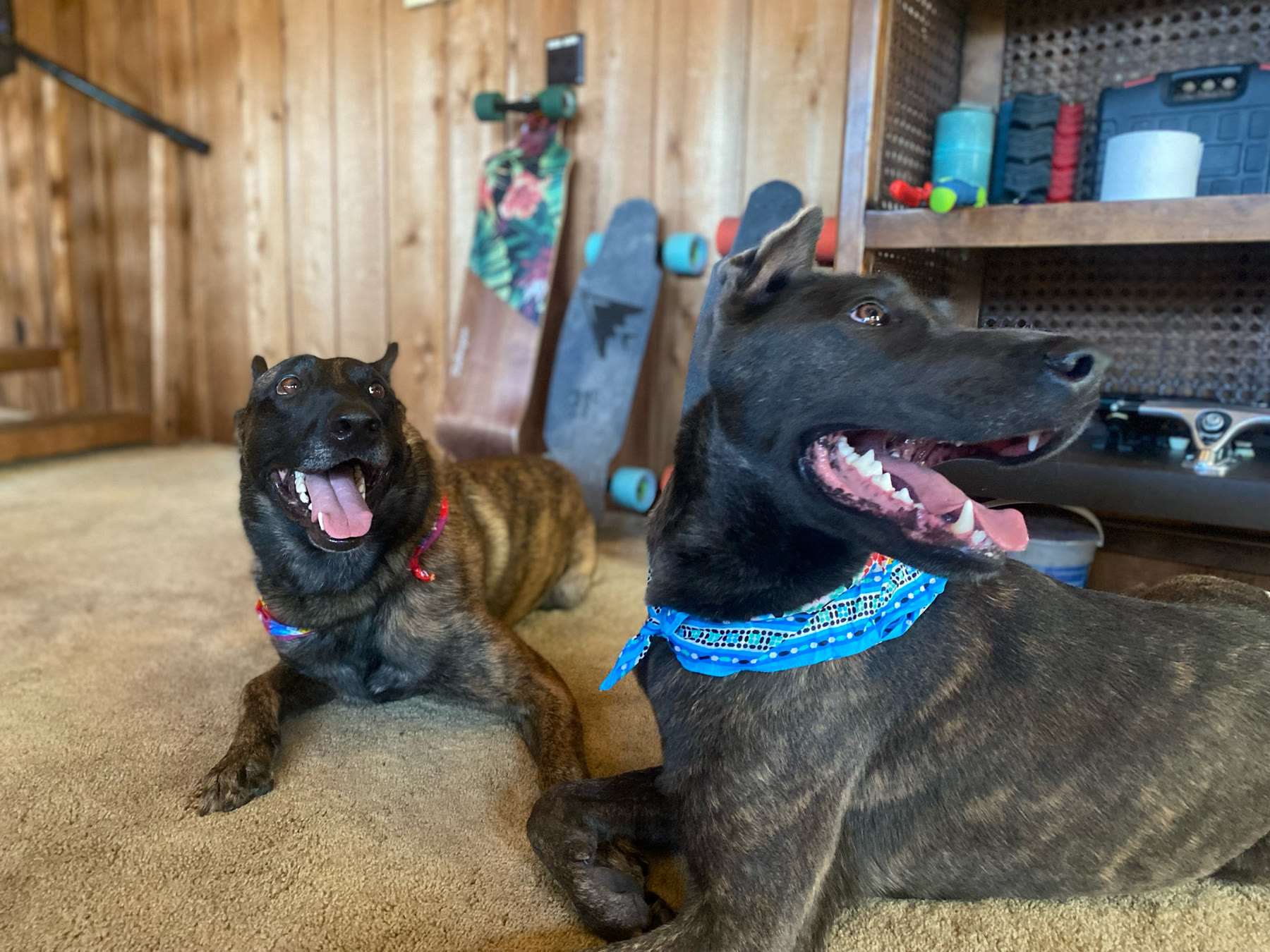
The AKC's Dutch Shepherd page gives one range for the whole breed: 21.5 to 24.5 inches in height and 42 to 75 pounds. It lists a life expectancy of 11 to 14 years, so whatever size the dog ends up, you are planning for more than a decade with it.
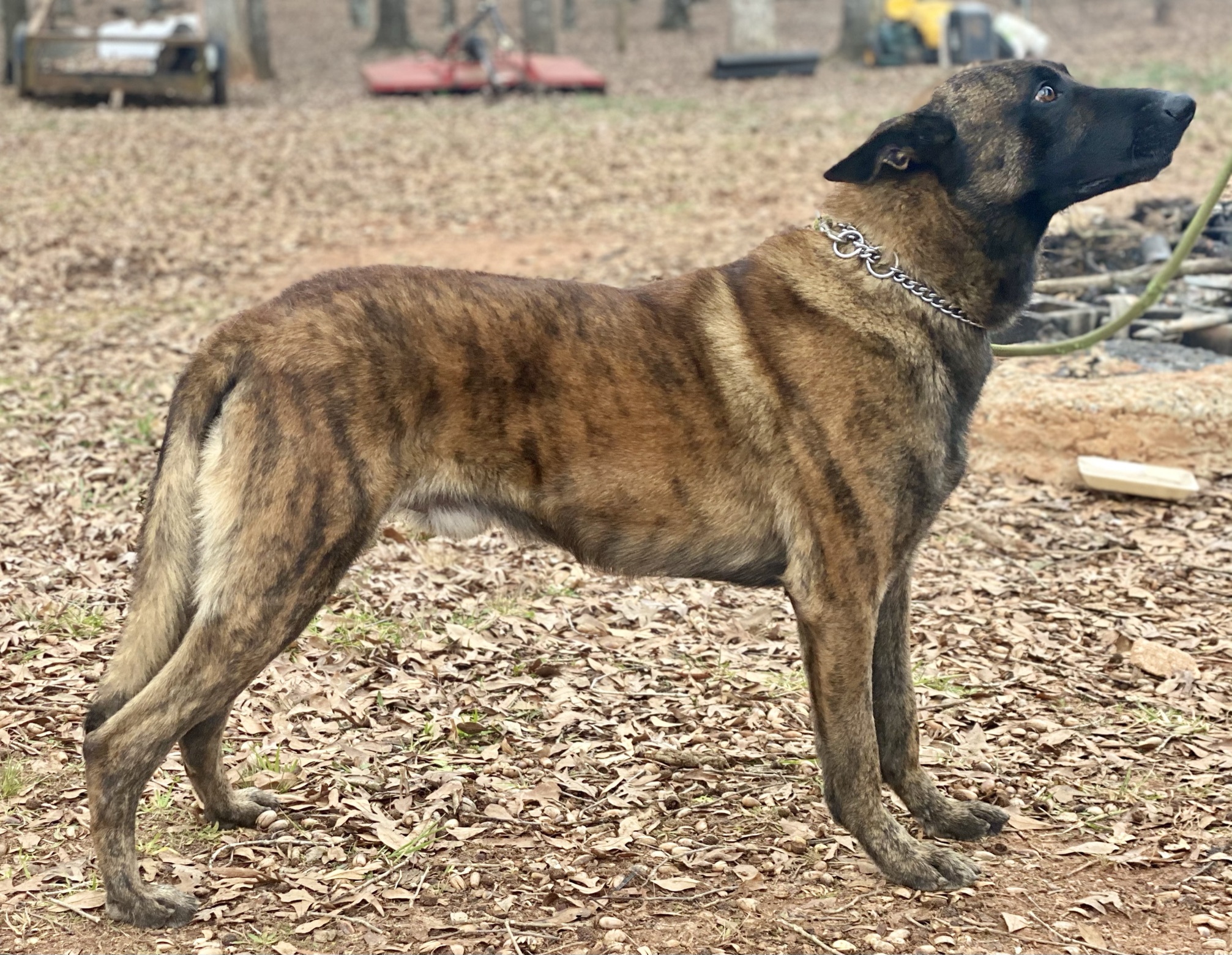
The AKC's breed standard opens with the same picture in words: "a medium-sized, middle-weighted, well-muscled dog of powerful and well-balanced structure."
Males and females
The standards split the range by sex. The AKC's official standard for the Dutch Shepherd, effective January 1, 2017, says "Males should be 22½ to 24½ inches in height and females 21½ to 23½ inches, measured at the withers." The FCI standard, which lists the Netherlands as the breed's origin, sets males at 57 to 62 cm and females at 55 to 60 cm, which works out to about 22.4 to 24.4 inches and 21.7 to 23.6 inches.
Height is taken at the withers, not the head. An AKC staff presentation for show judges defines the withers as "The highest point of the shoulders, right behind the base of the neck."
The AKC standard adds that "The difference between sexes is clearly recognizable, especially in the shape of the head and build of body." In both standards, the female range runs a little below the male range: one inch in the AKC's, 2 cm in the FCI's.
Weight: a range, not a target
Neither standard puts a number on weight. The FCI standard has a section headed "Size and Weight," and it lists heights only. The AKC standard asks for bone that is "solid and moderate weight in correct proportion to his height, appearance well balanced, neither too light or too heavy." The AKC breed page's 42 to 75 pounds covers the whole breed and is not split by sex.
That makes a fit body the goal, not a number on the scale. On growing puppies, the AKC's chief veterinarian, Dr. Jerry Klein, warns that "obesity in puppies can lead to a predisposition of future orthopedic issues later in life, such as hip dysplasia, so a fit, leaner puppy is considered preferable to a chubby older puppy."
Built a little longer than tall
A Dutch Shepherd is not square. The AKC standard says its length, "measured from point of breastbone to point of buttock, compared to the height, should be a 10 to 9 ratio." The FCI standard gives the same ratio, approximately, "as suits a trotting dog." The AKC standard describes the legs as powerful, with bone that is "solid but not heavy" in front and "solid but never heavy" behind.
The breed comes in three coats, short-, long- and rough-haired, and the AKC standard gives all three the same height ranges. Our coat guide covers the differences.
The show ring has hard limits. The AKC standard disqualifies "Males under 21 inches or over 26 inches" and "Females under 20 inches or over 25 inches."
Next to the Malinois and the German Shepherd
Every figure below is from the AKC's breed pages.
- Dutch Shepherd: 21.5 to 24.5 inches, 42 to 75 pounds.
- Belgian Malinois: 24 to 26 inches for males and 22 to 24 inches for females; 60 to 80 pounds for males and 40 to 60 pounds for females.
- German Shepherd: 24 to 26 inches for males and 22 to 24 inches for females; 65 to 90 pounds for males and 50 to 70 pounds for females.
On those numbers, the Dutch Shepherd's height range starts and ends below the other two. Its top, 24.5 inches, sits only half an inch above where the male Malinois and the male German Shepherd begin. For the rest of the comparison, read our honest takes on the Malinois and the German Shepherd.
When does a Dutch Shepherd stop growing?
The AKC's puppy growth chart sorts dogs by adult weight, and the Dutch Shepherd's 42 to 75 pounds straddles two of its columns: medium (21 to 50 pounds) and large (51 to 100 pounds). The chart says "All numbers are approximate," and here is what it shows for those two columns:
- 6 months: about 66% grown for a medium dog, 60% for a large one.
- 12 months: about 95% for medium, 85% for large.
- Fully grown: by about 15 months for medium, 18 months for large.
Dr. Klein explains that the long bones in a puppy's legs grow from two places called growth plates. When the plates stop making new tissue and calcify, he says, "they are said to have 'closed,' which means that they've stopped growing and the bone has reached its final size." The same AKC article notes that even after that, puppies keep adding muscle and body fat on the way to adulthood, and its FAQ says large and giant breeds "may continue developing until 18 to 24 months."
That timeline matters for exercise. Dr. Klein says "it is never recommended to do road work or jogging on a dog less than 14 to 18 months of age, especially large and giant breeds, until the growth plates have fully fused." Our exercise guide lays out what a growing Dutch Shepherd can do instead.
How to predict a puppy's adult size
Look at the parents. "Purebred dogs are known first and foremost for their predictability: predictability of size, coat, temperament, etc.," Dr. Klein says, while noting "there will be variances within members of each breed (and each litter)." The AKC article adds that a breeder can give you a rough idea of how big a puppy will get, based on other dogs in its family tree. Ask any breeder for both parents' height and weight.
Ours, for the record: Azul, the mother of our planned spring 2027 litter, weighs 75 to 80 pounds, and Dabo, the father, weighs more than she does. Both sit at the top of the AKC's 42 to 75 pounds or above it.
Then plan for the adult dog from day one. The AKC's crate guide suggests buying a crate sized for your puppy's adult size, with a divider, so it can "grow" with your dog. Our crate training guide has the rest.
Still deciding on the breed? Start with our ten honest questions.
Sources
- American Kennel Club: Dutch Shepherd breed page (height, weight, life expectancy)
- American Kennel Club: Official Standard for the Dutch Shepherd (PDF; approved January 11, 2016, effective January 1, 2017; general appearance, height by sex, proportions, bone, coat types, disqualifications)
- FCI-Standard N° 223: Hollandse Herdershond (Dutch Shepherd Dog) (PDF; heights in cm, proportions)
- American Kennel Club: Weighing and Measuring, Wicket and Scale Presentation by AKC Staff (PDF; definition of the withers)
- American Kennel Club: Belgian Malinois breed page (height, weight)
- American Kennel Club: German Shepherd Dog breed page (height, weight)
- American Kennel Club: Puppy Growth Chart: When Does My Puppy Finish Growing? (Susan Paretts, quoting AKC Chief Veterinarian Dr. Jerry Klein, updated Jun 23, 2026; growth chart, growth plates, purebred predictability, feeding, exercise)
- American Kennel Club: Everything You Need to Know About Crate Training Your Dog (Stephanie Gibeault, updated Sep 21, 2026; crate sized for adult size, with a divider)