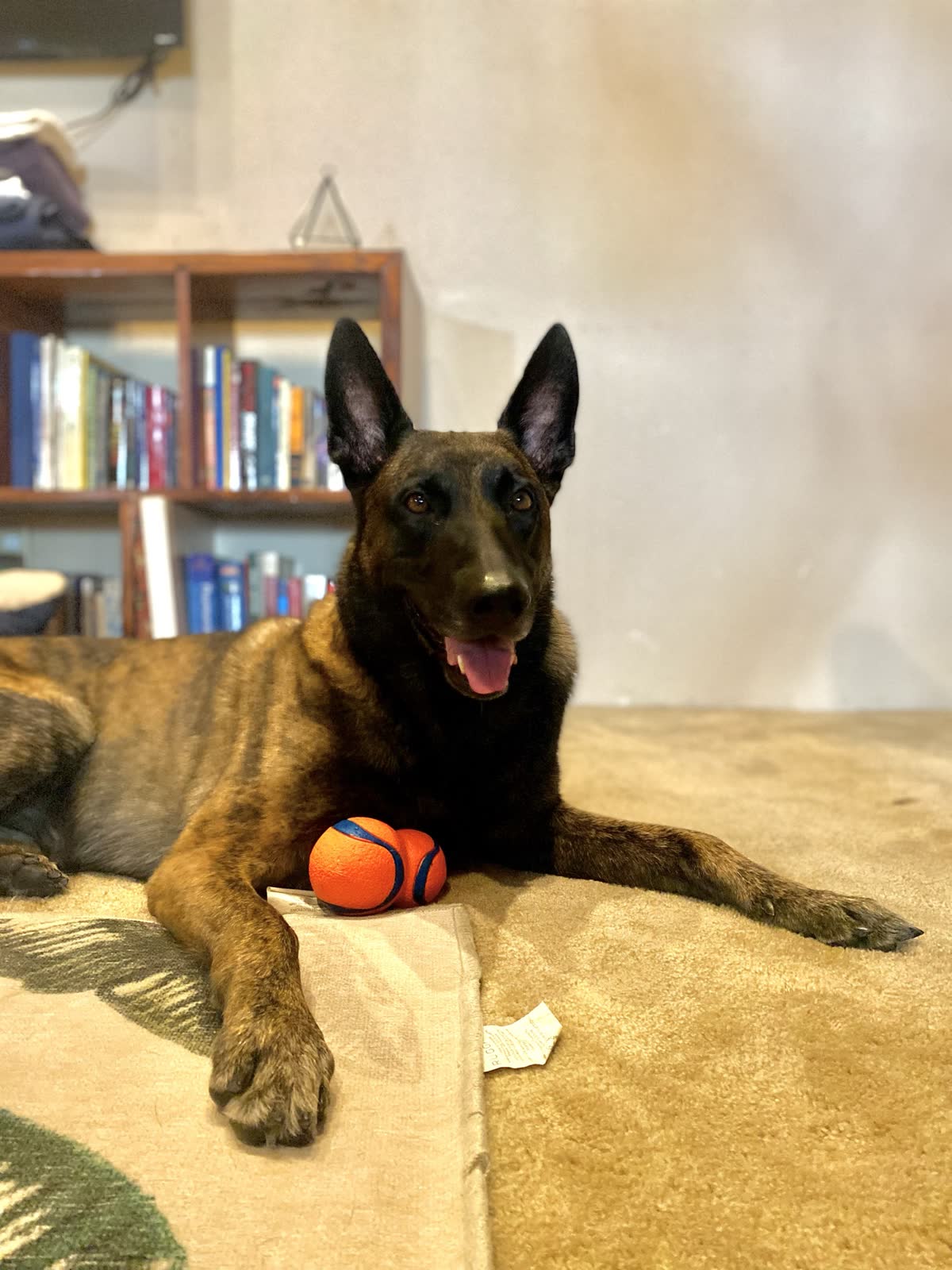
Ask any breeder whether their dogs are good with kids and you'll get the same answer: of course. It's the most reflexive yes in the dog world, and one of the least useful. Here's the truth we'd rather lead with: "good with kids" is not a breed trait. It's a household outcome — produced by the individual dog's temperament, the structure the adults maintain, and what the kids themselves are taught. A working-line Dutch Shepherd can be a spectacular family dog. Whether it will be in your family depends on things no pedigree can promise.
What the phrase actually promises — and what it can't
When a breeder says "good with kids," the most that can honestly be meant is this: the dog shows stable nerves, tolerance for chaos, and no resource guarding around small humans. That's temperament — and it matters enormously. What the phrase cannot promise is a dog that supervises itself. No dog, of any breed, is a babysitter. The families who do brilliantly with working dogs never expected one to be; they expected a capable animal and planned to manage it like one.
The honest case for a working dog in a family
Here's what surprises people: the traits that make a KNPV-line dog good at a job are the same ones that make a well-managed one genuinely good with children. Stable nerves mean the dog doesn't startle at shrieking, crashing toys, or a toddler's wobble — a century of selection against nervousness is worth more around kids than any amount of "family raised" marketing. High biddability means the dog actually obeys the rules you set. And a trained settle — the off-switch — means the dog can exist calmly in the middle of family life instead of orbiting it. We wrote about that in our Malinois comparison: of the two cousins, the Dutch Shepherd is generally the one with more natural off-switch in the house, which is exactly why families ask about them.
What the drive does around kids
Now the other half. These dogs carry real prey drive — the urge to chase and grab things that move fast and squeal. Small children moving fast and squealing look, to an untrained adolescent dog, like the most exciting game ever invented. This is not aggression and it is not a bad dog; it's a working drive pointed at the wrong target. Management looks like: the dog is taught from day one that kids are never chase targets, kids' running games happen when the dog is crated or settled, and the dog gets a legal outlet for that drive every single day — a ball, a tug, a sport. Skip the outlet and the drive finds its own, and nobody likes what it finds.
The setups that work — and the ones we decline
The family placements that thrive share a pattern: kids old enough to follow dog rules (usually 6 and up), adults who wanted a dog to train rather than just own, crates and gates used without guilt, and a daily hour that genuinely belongs to the dog. The pattern behind most failed working-dog placements is just as consistent: toddlers plus a first-time dog owner plus no time — usually assembled around the phrase "good with kids" doing work it was never built to do. We'd rather decline an application than watch that movie. Our ten honest questions are the same ones we'll ask you, and family setup is question one.
How we stack the deck
Two things on our end move the odds. First, temperament evaluation: at six to seven weeks, puppies in the same litter already differ — some carry the sharpest drive, some carry more handler focus and tolerance. Matching the right puppy to a family beats letting a family pick the prettiest brindle, every time. Second, screening: placement here is application-only, every puppy goes home spayed or neutered, and we stay in the picture for the life of the dog. "Good with kids" isn't something we stamp on the litter — it's something we help each household build, starting with an honest match.
Wondering how the calm actually gets built? The settle, the crate, the outlet — that's training, not luck, and it starts the week the puppy comes home. Compare the breed honestly with its Malinois cousin, or start with the Dutch program behind our bloodlines.