Every serious working-dog pedigree conversation eventually lands on four letters: KNPV. We use them on our own site — "KNPV-proven bloodlines" — so here's what the phrase actually means, and why it's the credential buyers of working Dutch Shepherds look for.
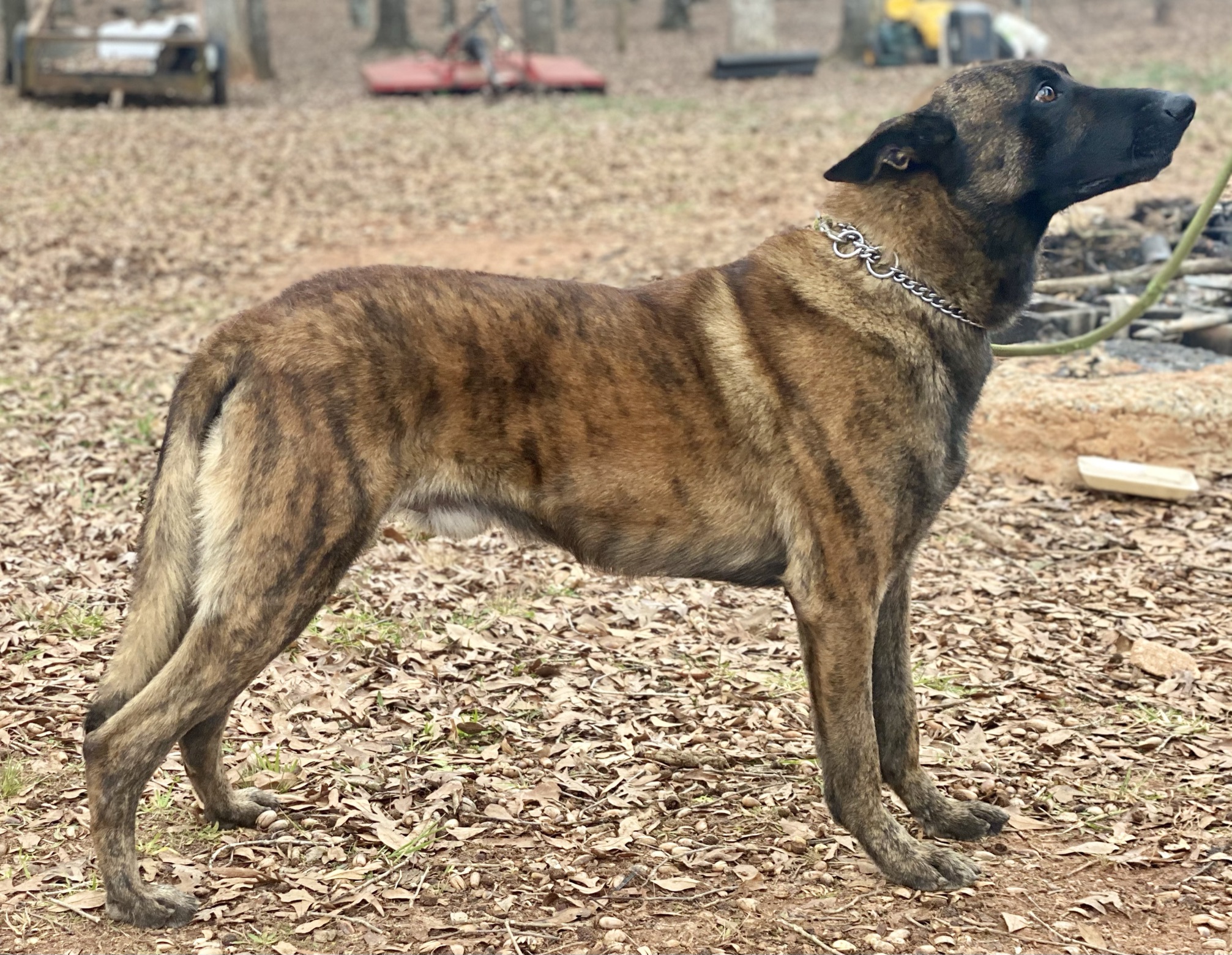
A police-dog program older than most breed clubs
KNPV stands for Koninklijke Nederlandse Politiehond Vereniging — the Royal Dutch Police Dog Association, founded in 1907. Its purpose was never conformation shows or ribbons. It exists to test whether a dog can do genuine police-style work: obedience under pressure, searching, protection, and clear-headedness around gunfire, water, and chaos.
Dogs train for years toward the program's certificates — the best known being PH1 and PH2 (Politiehond, "police dog," levels 1 and 2). A trial covers heeling and control work, retrieving over hurdles, water exercises, article searches, and a series of protection scenarios: stopping a fleeing suspect, guarding, transports, and call-offs where the dog must break off an engagement on a single command. Judges score not just whether the dog does the work, but whether it stays thinking while it does.
Why KNPV dogs supply the world's K9 units
For decades, Dutch KNPV clubs have functioned as the informal farm system for police and military K9 programs across Europe and North America. Departments buy titled, proven adults out of the program because the certificate answers the expensive question: can this dog actually work? That steady demand did something unusual to the breeding: KNPV breeders select almost purely on performance — drive, nerve strength, health, trainability — generation after generation, for over a century.
That's also why many KNPV dogs aren't registered with a kennel club at all. The program cares whether the dog can pass a PH1, not whether its papers are pretty. The result is a gene pool shaped by work rather than fashion — the reason working-line Dutch Shepherds have largely escaped the health and temperament problems that show breeding has inflicted on other shepherd breeds.
The lines behind our pairing
Our sire, Dabo, carries the Big Roy line. Big Boy Roy, handled by Hans Pegge, won the 2013 Dutch National KNPV Championship with one of the highest scores in the competition's history, and his offspring became foundational to working-line Dutch Shepherd breeding in North America. Our dam, Azul, carries the Wibo line, known for the structural soundness and deep temperament stability that breeders select for on the dam's side. There's video of both lines' foundation dogs working on our lineage page.
What this means for a puppy in South Carolina
A KNPV-line puppy in a family home isn't going to bite sleeves for a living — but the selection that built these lines is exactly what makes them exceptional partners for sport, scent work, search and rescue, personal protection, and active homes that train. The drive is real, which is why we screen every home before placement. If you're weighing this breed against its more famous cousin, start with our honest Dutch Shepherd vs. Malinois comparison.