Most people have known a German Shepherd. Far fewer have met a Dutch Shepherd. At a glance the Dutch dog can look like a striped version of the same animal. It is an easy assumption to make, and it is wrong in ways that matter. Here is how the two breeds compare on size, coat, temperament, training and exercise, using the American Kennel Club's own breed descriptions, and which one fits which home.
Shared roots, a deliberate split
Both breeds started as farm dogs. The AKC traces the German Shepherd to the family of German herding dogs that, until the late 19th century, varied in type from district to district. It describes the Dutch Shepherd as a natural land-breed of the Netherlands, an all-purpose farm dog that worked as a farm guard, a drover and a livestock dog.
The split was on purpose. According to the AKC, the Dutch breed's first standard, in 1898, allowed any coat color. By 1914 the Dutch went brindle-only, to set their dog apart from the German Shepherd and the Belgian Shepherd. We cover that history in our coat guide.
Side by side
Every figure below is the AKC's.
- Height: German Shepherd, 24 to 26 inches for males and 22 to 24 inches for females. Dutch Shepherd, 21.5 to 24.5 inches.
- Weight: German Shepherd, 65 to 90 pounds for males and 50 to 70 pounds for females. Dutch Shepherd, 42 to 75 pounds.
- Life expectancy: German Shepherd, 12 to 14 years. Dutch Shepherd, 11 to 14 years.
- Coat: German Shepherd, a medium-length double coat. Dutch Shepherd, short, long or rough.
- Color: the AKC's color list for the German Shepherd includes black and tan, sable and black, among others. The AKC's standard colors for the Dutch Shepherd are gold brindle and silver brindle.
- AKC status: the German Shepherd was recognized in 1908 and ranks 4th of 210 breeds in popularity. The Dutch Shepherd has been recorded in the Foundation Stock Service since April 2012 and has been eligible to compete in the Miscellaneous Class since January 1, 2017. After a September 2026 AKC Board vote, it moves into the AKC Stud Book on June 30, 2027.
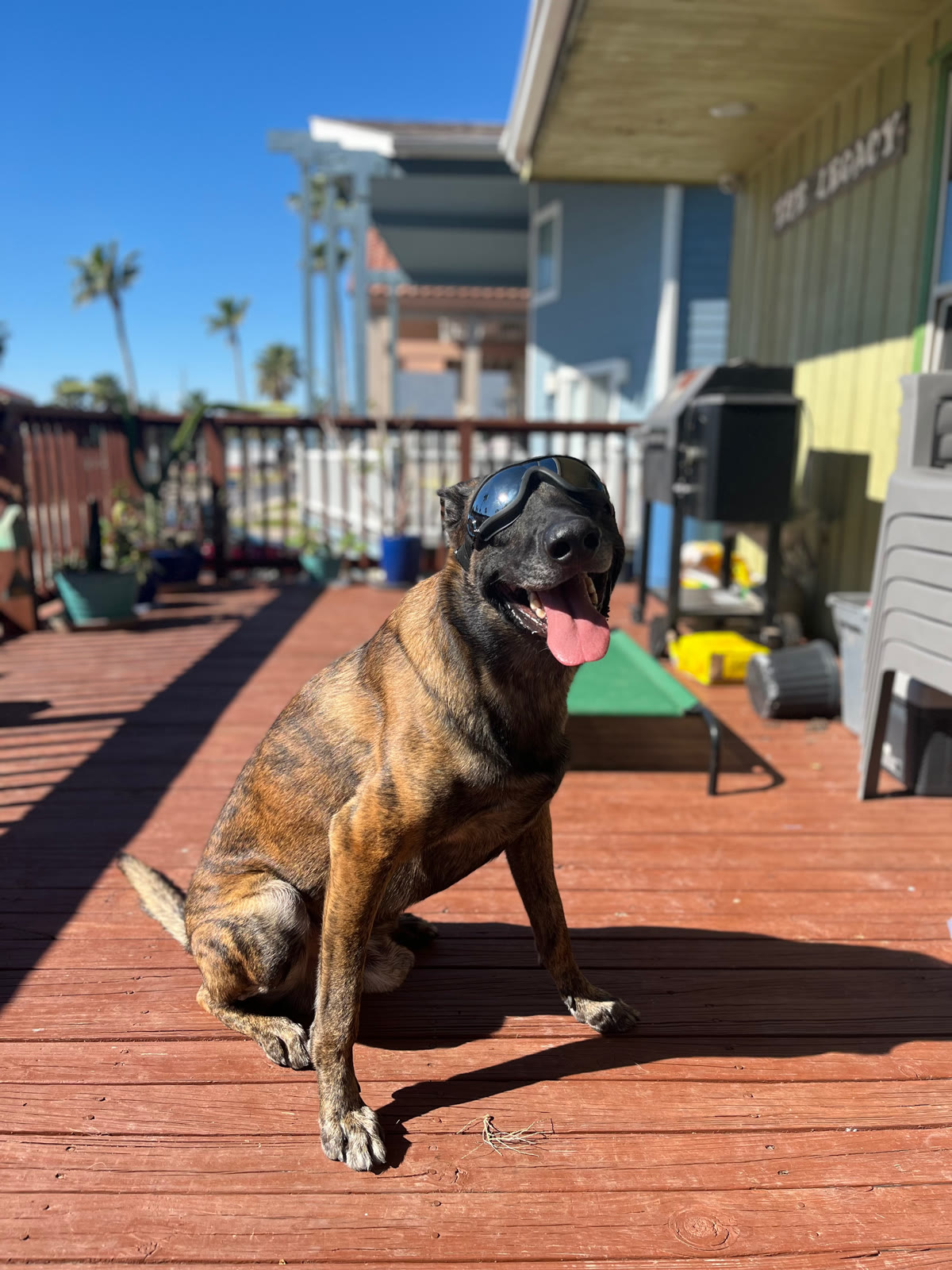
On the AKC's numbers the German Shepherd is the bigger breed. The top of its weight range sits 15 pounds above the Dutch Shepherd's. A breed range is not a limit, though, and our own Dutch Shepherds sit at the top of the Dutch range and past it: Azul, our female, weighs 75 to 80 pounds, and Dabo, our male, weighs more than she does. Ask any breeder what both parents weigh.
Temperament: the reserved guardian and the independent worker
The AKC calls the German Shepherd loyal, confident, courageous and steady, and quotes the breed standard on a "certain aloofness that does not lend itself to immediate and indiscriminate friendships." It adds that the breed is known as a "one-man" dog for its loyalty to its owner or main caretaker.
The AKC describes the Dutch Shepherd as lively, athletic, alert and intelligent, a breed that has kept its herding instinct. It is just as frank about the catch: the breed has "an independent nature" and "can be slightly obstinate and have a mind of its own."
Neither description is a sales pitch. One dog leans steady and reserved. The other leans lively and self-directed. Know which one you are signing up for.
Training: different sessions for different minds
For the German Shepherd, the AKC says early socialization and puppy classes are vital, and that "consistency and positive, reward-based training will yield excellent results." It also says the dog should be raised in the household, as part of the family's activities.
For the Dutch Shepherd, the AKC says the breed "does better with shorter training sessions (with little repetitions)" and grows more driven as the work gets more mentally stimulating. Then comes the warning: "Without training, this breed will become very independent and will start to make its own decisions."
In practice, plan short, varied sessions for a Dutch Shepherd, and plan them every day. An untrained one does not wait for instructions. It writes its own.
Exercise: both need a job
The AKC says the German Shepherd "requires lots of exercise for his physical and mental well-being," and that a dog without enough of it "will become frustrated and likely to develop undesirable behaviors."
The Dutch Shepherd, in the AKC's words, "has been bred for hard work, and plenty of it," and "does not want to be a pet left at home; they want to be your partner in life." The same passage holds the good news: the breed "will differentiate between work, play, and chill time, adjusting its energy level accordingly." That is the off-switch, and it is built through training, not bought with a pedigree.
Both breeds shine in dog sports. The AKC names agility, herding, tracking and dock diving for the German Shepherd, and herding, scent detection, tracking, IPO, obedience and agility for the Dutch Shepherd. Our guide to dog sports covers how to pick one.
Grooming and shedding
The AKC describes the German Shepherd's coat as a medium-length double coat that usually needs "a quick brushing every few days or so," with heavier shedding once or twice a year. A short-coated Dutch Shepherd needs only occasional brushing, switching to daily brushing during the spring and fall shedding periods. Neither breed is shed-free. The long and rough Dutch coats have their own routines, covered in our coat guide.
Common and rare
At 4th of 210 breeds, the German Shepherd is easy to find, and so is breed-savvy help. The German Shepherd Dog Club of America, formed in 1913, is its AKC parent club. The Dutch Shepherd does not enter the AKC Stud Book until June 30, 2027 (what that changes), and fewer people know it, so expect to do more of your own homework. Rarity is a reason for care, not a reason to buy, as we argued in our piece on the wrong reasons.
Which dog fits which home
- Lean German Shepherd if you want a classic guardian that is reserved with strangers and devoted to its people, and you value a breed with a long AKC history and a national parent club.
- Lean Dutch Shepherd if you want an athletic partner, you enjoy training rather than tolerate it, and you will give the dog a job every day.
- Choose neither if you want a dog that is fine alone all day. The AKC's descriptions of both breeds rule that out.
Weighing the Malinois too? Read our honest comparison with the Malinois, then work through our ten honest questions.
Sources
- American Kennel Club: Board of Directors meeting minutes, September 15-16, 2026 (PDF; Dutch Shepherd standard and Herding Group eligibility approved, Stud Book entry June 30, 2027)
- American Kennel Club: Dutch Shepherd breed page (size, life expectancy, temperament, training, exercise, grooming, AKC status, history)
- American Kennel Club: German Shepherd Dog breed page (size, life expectancy, temperament, training, exercise, grooming, colors, 1908 recognition, popularity rank, parent club)