Yes, Dutch Shepherds shed. The AKC's Dutch Shepherd breed page scores Shedding Level 3 of 5, on a scale from "No Shedding" to "Hair Everywhere." How much brushing that means depends on the coat, and the AKC and FCI standards describe three: short, long and rough (the FCI calls it wire). Here is what each standard asks of each coat, what the AKC says each one takes, and the routine basics the AKC lists.
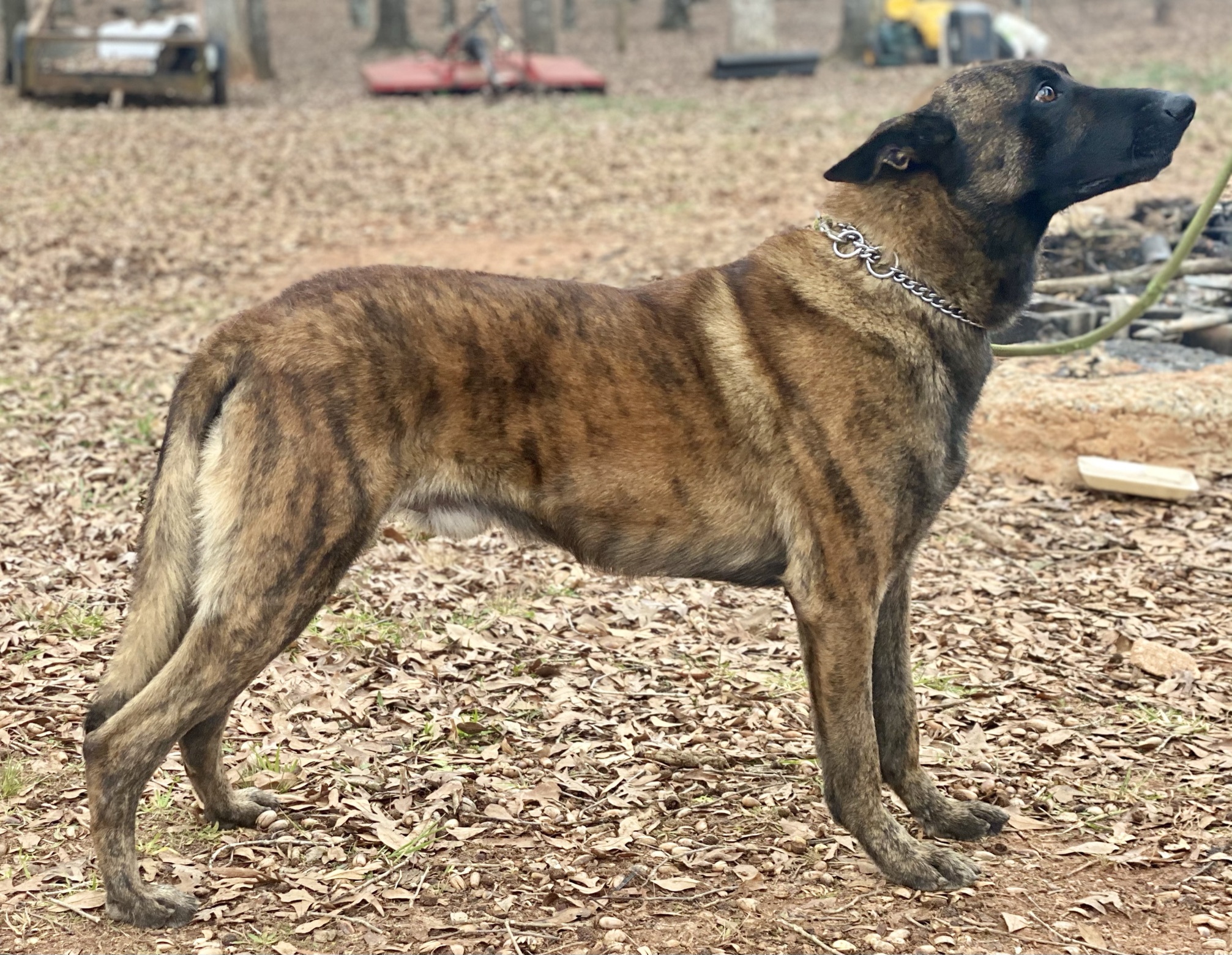
At a glance
The scores are the AKC breed page's own, with the end labels of each scale as the AKC shows them. They cover the whole breed. The page's grooming text splits its advice by coat.
- Shedding Level: 3 of 5, from "No Shedding" to "Hair Everywhere." The AKC describes it as "How much fur and hair you can expect the breed to leave behind."
- Coat Grooming Frequency: 2 of 5, from "Monthly" to "Daily." The AKC describes it as "How frequently a breed requires bathing, brushing, trimming, or other kinds of coat maintenance."
- Short-hair types: "will only need occasional brushing," with daily brushing during the seasonal shedding periods in the spring and fall.
- Long-haired dogs: groomed "about once per week, or more often than that if their work level and environment requires it."
- Rough-hair types: "a combing once per month," and the coat "is hand-stripped twice per year."
- Beyond the coat: bathing "as-needed," nails trimmed "if necessary," ears checked regularly, teeth brushed.
Three coats, as the standards describe them
The AKC standard says "The breed is presented in three coat types, short-, long- and rough-haired." The FCI standard's wording is "short-, long- and wire haired." Our coat guide covers color and what each coat looks like, and our guide to what a Dutch Shepherd looks like covers the rest of the standard. For care, three points matter.
- All three have an undercoat. The short and long coats are each described with a "woolly undercoat," and the rough coat with a "woolly, dense undercoat."
- The coats differ in length and texture. The short coat is "not too short." The long coat is "harsh to the touch," has feathering on the backs of the forelegs and has "no fringes at the ears." The rough coat is a "dense, harsh, tousled coat," and both standards add "Furnishings are not soft."
- The rough coat comes with a schedule. The AKC standard and the FCI standard both say it "should be hand-plucked on average twice a year."
The AKC standard also says the dog "is shown in natural coat without excessive grooming." Neither standard says anything about shedding. The AKC breed page's trait list shows the breed's coat type as "Double" and its coat length as "Short," one entry for the breed even though its grooming section describes three coat types.
Shedding and brushing, coat by coat
Short coat. The AKC's grooming section says the short-hair types "will only need occasional brushing" and to "switch to daily brushing during the seasonal shedding periods in the Spring and Fall." An AKC article on managing shedding, which is not about Dutch Shepherds in particular, says that for dogs that shed seasonally, "the heaviest shedding usually occurs in spring and fall," and that during those periods "you may need to groom your dog more often on a temporary basis." The same article says "dogs with thick double coats, such as Golden Retrievers, are more likely to shed year-round." It does not name the Dutch Shepherd. Our read is that spring and fall are the peaks, not the only time hair comes out. For short-coated dogs it calls natural-bristle brushes and grooming gloves good options.
Long coat. The AKC says the long-haired dogs "will need to be groomed about once per week, or more often than that if their work level and environment requires it." The AKC's home-grooming article speaks of dogs in general: most dogs "only need a few brushing sessions a week, though long-coated breeds often do best with daily brushing." In its section for longer or double coats, the shedding article says slicker brushes "work well for removing dead hair from dense coats." Our read is that the breed page and the home-grooming article both point to weekly grooming or more for a long coat.
Rough coat. The AKC says the rough-hair types "require a combing once per month and the coat is hand-stripped twice per year." The two standards say the rough coat "should be hand-plucked on average twice a year." The breed page's grooming section and the standards' coat sections do not say who does the stripping or how long it takes. The AKC's home-grooming article, which speaks of dogs in general, lists "stripping knives" among the tools "for certain coat types" and says professional groomers, dog handlers and some veterinary technicians "are trained to provide breed-specific grooming services." Our read is that if you are leaning toward a rough coat, it is worth learning what hand-stripping involves before you commit.
Bathing a Dutch Shepherd
The AKC breed page says "Bathing can be done as-needed." An AKC article on bathing says the answer depends on a lot of factors. Beth Cristiano, owner of Pretty Paws LLC, is quoted there saying "How frequently a pet needs a bath greatly varies based upon their breed, lifestyle, length of coat, and how much homework a pet owner is willing to do." Jorge Bendersky, a celebrity dog groomer quoted there, offers this advice: "We should wash our dogs when they are no longer huggable."
Nails, ears and teeth
The AKC says "All breeds require regular nail trimming." For the Dutch Shepherd, its breed page says nails "can be trimmed, if necessary, with a nail clipper or grinder to avoid overgrowth, splitting and cracking."
- How often: an AKC nail article says "Most dogs need nail trims every three to four weeks, but frequency depends on activity level and how quickly the nails grow."
- How: "Clip only the tip of the nail, straight across," and avoid "clipping past the curve of the nail" so you do not hit the quick. Dr. Jerry Klein, Chief Veterinarian for the AKC, is quoted there suggesting that if you have never clipped a dog's nails before, you "may want to have your veterinarian or vet tech give you a lesson."
- Dark nails: the home-grooming article says "You can see where the quick ends on a white nail but not on a dark nail," and the nail article says "For dogs with dark nails, watch for a chalky white ring."
- Ears: the breed page says they "should be checked regularly to avoid a buildup of wax and debris." The home-grooming article says "Most dogs benefit from ear cleaning about once a month, although some may require more frequent care," and to clean "only the visible outer portion of the ear."
- Teeth: the breed page says "Teeth should be brushed." The home-grooming article says "Brushing your dog's teeth every day is ideal, though a few times a week still helps."
The honest answer
A Dutch Shepherd sheds. The AKC breed page scores Shedding Level 3 of 5 and Coat Grooming Frequency 2 of 5, and its grooming section says the short-hair types "will only need occasional brushing" with daily brushing in the spring and fall shedding periods, the long-haired dogs will need grooming about once per week, or more often if their work level and environment requires it, and the rough-hair types require a combing once per month with hand-stripping twice per year. The same section adds bathing as needed, nails trimmed if necessary, ears checked regularly and teeth brushed. The AKC's home-grooming article says "A responsible breeder often has valuable knowledge about coat care, recommended tools, and grooming techniques specific to the breed." Our read is that you should ask about the coat of the dog in front of you before you commit.
Still deciding on the breed itself? Start with our ten honest questions.
Sources
- American Kennel Club: Dutch Shepherd breed page (Shedding Level and Coat Grooming Frequency scores, coat type and length, grooming section)
- American Kennel Club: Official Standard for the Dutch Shepherd (PDF; approved January 11, 2016, effective January 1, 2017; coat)
- FCI-Standard N° 223: Hollandse Herdershond (Dutch Shepherd Dog) (PDF; coat varieties, hand-plucking)
- American Kennel Club: Dog Shedding: What to Expect and How to Manage It (AKC Staff, updated August 5, 2026; double coats, seasonal shedding, brushes and tools)
- American Kennel Club: How to Groom Your Dog at Home: Easy Tips for Everyday Care (AKC Staff, updated September 2, 2026; brushing, tools, trained groomers, nails, ears, teeth, breeders)
- American Kennel Club: How to Trim Your Dog's Nails Safely (Harriet Meyers, updated June 1, 2026; trim schedule, technique, dark nails)
- American Kennel Club: How Often Should You Bathe Your Dog? (Kristina Lotz, published February 23, 2023; quotes from Beth Cristiano and Jorge Bendersky)