The AKC's breed page puts it plainly: "This breed does not want to be a pet left at home; they want to be your partner in life." A partner rides along: to the trainer, the trail, the vet and the field. A dog this size needs a real plan for the car: a crate or a crash-tested harness in the back seat, a head kept inside, calm manners taught one step at a time, a puppy's carsickness handled with patience, and never a wait in a parked car.
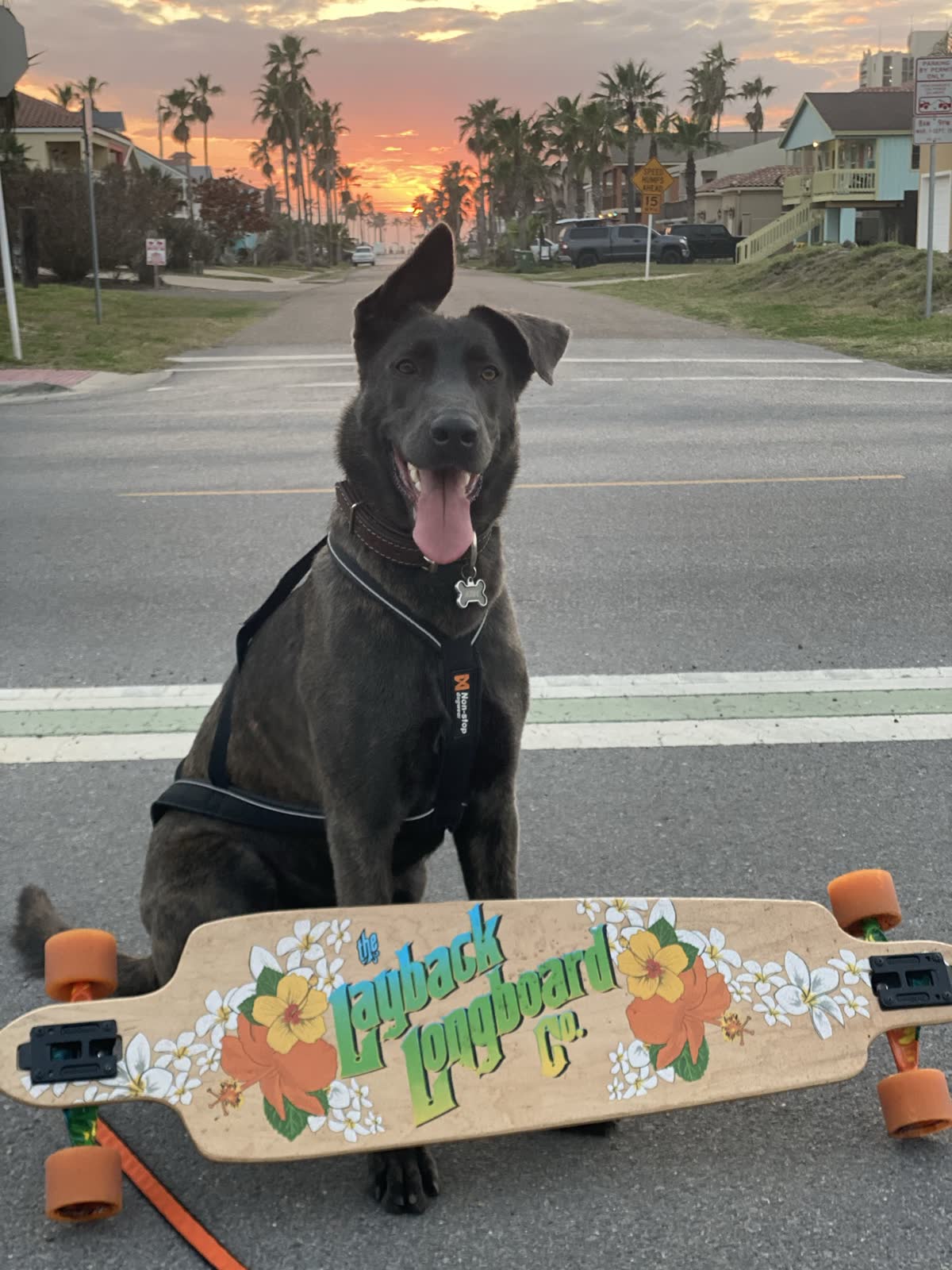
Crate or crash-tested harness, in the back seat
The AKC's rule: "When dogs are riding in a vehicle, they should be in a dog crate or secured with a crash-tested dog seat belt." The American Veterinary Medical Association (AVMA) gives the reason. In a collision, "unrestrained pets may be crushed by deployed airbags, or thrown out or through windows or windshields." The airbags are also why the AKC says "It's optimal for dogs to be in the backseat of the car over the front."
Size matters here. The AKC lists the Dutch Shepherd at 21.5 to 24.5 inches and 42 to 75 pounds, and the AVMA says a travel crate should be "big enough to allow your pet to stand up, turn around, and lie down comfortably." For a grown Dutch, that is a big crate. The AVMA wants it placed "as near to the center of the vehicle as possible," and secured so it can't slide. If it won't fit, the AKC says "Seat belts are great options if your vehicle isn't large enough to accommodate an appropriately sized crate for your dog."
A car harness is its own piece of gear. The AVMA: "Vehicle harnesses (usually for dogs only) are different from the harness you might use to walk your dog. Look for crash-tested harnesses that work with your vehicle's seat belt." With a dog belted in the back seat, the AKC adds one more step: turn on the child locks, so a paw on the door can't open a window. Our crate training guide makes the crate a happy place long before it rides in the car.
Head inside, and off the truck bed
"Never allow your dog to ride in the car with their head out the window," the AKC says. A dog can jump out, or have its eyes hurt by flying debris. The AVMA adds the risk of being "thrown from the window on an abrupt turn or stop." Keep the windows up or only cracked.
The truck bed gets a firm no. The AKC: "Dogs should also never ride in the back of a pickup truck (which is illegal in many areas), whether if they are loose, tethered, or crated." The AVMA warns that a tether "could tangle, injure, or even choke your dog," and says that if you truly must use the bed, use "a secured and appropriately sized and ventilated dog kennel."
Teach the car like any other skill
"Although car travel is familiar to humans, how to behave in this scenario isn't something dogs automatically understand," the AKC notes. Its trainers build it in small steps: get the dog used to the crate or harness outside the car, then sit together in the parked car, then run the engine with no drive, then go to the end of the driveway and back, then take short trips to places your dog loves, like a park. The rule for every step: "Only move on to the next step when your dog is completely relaxed at the current stage."
Two habits matter most for a Dutch Shepherd. The first is the exit. The AKC says "it's important that your dog not bolt from the car the minute a crate door is opened," so leash up first and let your dog out on a release cue. That is the same calm we build in The Off Switch and recall training.
The second is the drive-through and the gas pump. The AKC calls these "particularly stressful or overly arousing for dogs who are very excited, nervous around new people, or prone to guarding." The AKC standard asks this breed for "loyalty and reliability, alertness, and watchfulness," so plan for a stranger walking up to the window. Reward calm, and keep the rear windows fully closed "to prevent people from reaching in to pet your dog."
Puppies and carsickness
Carsickness is "most often seen in puppies," the AKC says, because "the structures in the inner ear used for balance aren't fully developed yet." Many outgrow it, though the AKC adds that "some dogs never outgrow the nausea and vomiting caused by motion sickness." A bad start can also leave a dog anxious about the car itself. The AKC lists "being separated from their litter" among the things a dog can tie to the car, and for a new puppy, the ride home is often that trip.
The AKC's advice is to start teaching calm car manners "As soon as your dog or puppy comes home." Its tips for queasy riders:
- Put your dog in the middle of the back seat "so they're more likely to look forward." Some owners use a solid-sided crate to limit the view.
- Lower the windows a few inches and keep the car cool.
- Skip the meal right before you leave: "schedule your dog's feeding several hours ahead of your departure."
- "Exercise your dog about 20 minutes before you leave to burn off nervous energy."
- "Be sure to consult your vet before giving your dog any medications or herbal remedies."
Never wait in a parked car
The AVMA's numbers: the temperature inside a car "can rise about 20 degrees Fahrenheit in just 10 minutes, and almost 30 degrees in 20 minutes." After an hour, "Even on a 70-degree day, that's more than 110 degrees inside your vehicle!" Shade doesn't save it, "And cracking the windows makes no difference." Cold is a risk too: the AVMA says a chilly car "isn't much better than leaving them outdoors."
Its rule is simple: "Never leave your pet alone in a parked vehicle, no matter what the outdoor temperature or how long you think you'll be gone." Before you load up, the AVMA says to ask whether your dog really needs to come, and if not, "leave your pet safely at home." Our guide to leaving a Dutch Shepherd home alone covers that side.
On a long drive
The AKC's long-drive tips: "Stop every few hours to give your dog a chance to go." "Carry fresh, clean water and a portable dish." And your dog "should always be wearing a dog collar with updated identification tags," with a microchip that is registered to you.
New to the breed? Start with our ten honest questions.
Sources
- American Kennel Club: Dog Car Safety: Training Your Dog to Ride in the Car (Sassafras Patterdale, CPDT-KA, updated February 23, 2026; restraint, windows, truck beds, child locks, exits, drive-throughs)
- American Kennel Club: Teach Your Dog to Ride in the Car (Stephanie Gibeault, MSc, CPDT, updated August 14, 2026; step-by-step training, exercise before trips)
- American Kennel Club: Carsickness in Dogs (Jan Reisen, updated September 17, 2025; causes, seating, vet advice)
- American Kennel Club: How to Keep Your Dog Comfortable During Car Rides (Stephanie Gibeault, MSc, CPDT, updated March 10, 2026; back seat, feeding, water, stops, ID)
- American Veterinary Medical Association: Pet safety in vehicles (temperature rise, restraint, harnesses, crates, pickup trucks)
- American Kennel Club: Dutch Shepherd breed page (average sizes, temperament)
- American Kennel Club: Official Standard for the Dutch Shepherd (PDF; effective January 1, 2017; temperament)