Of everything families ask us, one question comes up more than any other: can this dog actually relax? They have seen the videos of Dutch Shepherds flying over obstacles, and they have read our comparison with the Malinois, where we said the Dutch Shepherd generally carries more natural off-switch in the house. Both things are true, and here is the part that matters: the off-switch is real, and it is built, not installed. Genetics decide whether a dog is capable of deep calm. The first year in your home decides whether you ever see it.
What the off-switch is, and what it is not
The off-switch is not laziness, and it is not low drive. It is a specific skill: the dog's ability to power all the way down when nothing is happening, and to come back up instantly when something is. Watch a good working dog at home and you will see genuine rest, flat on a side, breathing slow, while the household moves around it. That recovery, from full throttle to full stop and back, is what a century of Dutch selection was actually breeding for. A patrol dog that cannot rest in the van is as useless as one that cannot fire on command. The genetics give you a dog capable of both gears. They do not give you a dog that chooses the calm gear on its own at eight months old. Nobody's genetics do that.
The calm has a price, and it is paid daily
Here is the exchange rate that makes the whole thing work: one real outlet a day buys you a calm dog the other twenty-three hours. A serious game of tug with rules, a ball session with obedience mixed in, a nosework search, a structured walk with work sprinkled through it. Twenty to forty minutes where the dog's brain and body genuinely get spent. Skip it, and no amount of training holds the lid on. Drive is not optional equipment on these dogs, and it does not evaporate because the family is busy this week. The households that end up with the serene dog on the porch are the ones that treated the daily outlet like brushing their teeth. The ones who thought a big backyard would do it ended up living with a furry tornado, and the backyard had nothing to do with it.
The crate is where the calm starts
Every settled adult working dog we know started as a puppy whose rest was protected. Young puppies need enormous amounts of sleep, and a working-line puppy left loose to follow the family around all day will skip that sleep in favor of stimulation, every time. The result is the overtired, bitey, frantic puppy that convinces families they got a defective dog. The crate fixes this. Not as punishment, and not as storage: as a bedroom with a door, where naps actually happen and the puppy learns from week one that powering down is a normal part of every day. A predictable rhythm of out, work, potty, and rest does more for the eventual off-switch than any single command you will ever teach.
Teaching the settle itself
Past the puppy stage, the off-switch gets trained like anything else, mostly by rewarding the behavior everyone else ignores. A mat or a "place" bed gives the dog a concrete answer to the question "what should I be doing right now?" Start with a minute of quiet lying down while the family eats, and pay it. Stretch it to a television episode. Take it on the road: calm on a leash outside the coffee shop, calm in the truck, calm at the kid's practice. The dog learns that stillness is not the absence of a job. Stillness is the job, and it pays. Dogs that carry handler focus, the trait we select our calmer placements for, take to this fast, which is exactly why we match puppies to households by temperament instead of letting families pick by color.
The honest first-year timeline
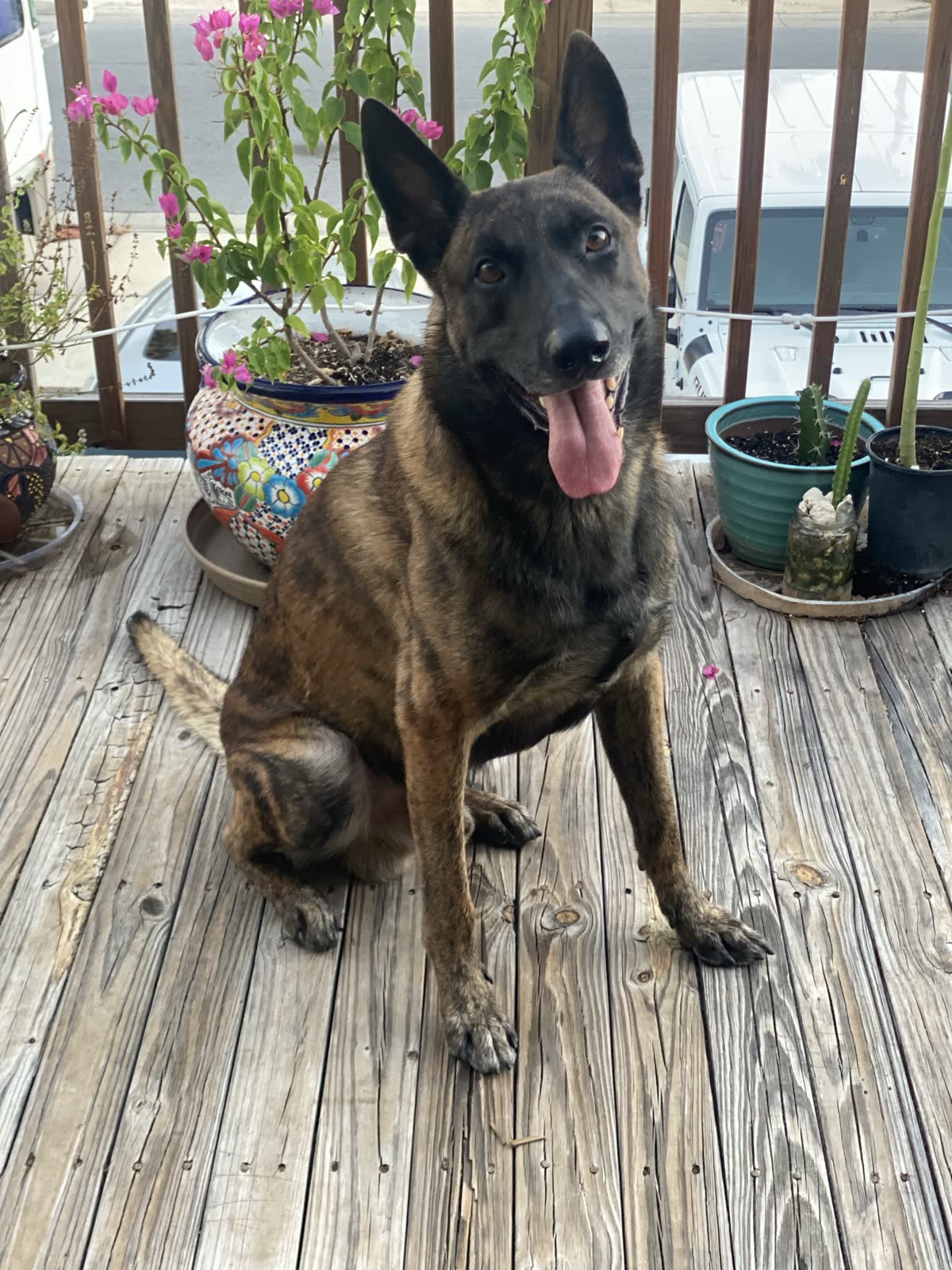
Nobody puts this part in the sales pitch, so we will. From eight weeks to about six months, you are running a structure-heavy program: crate rhythm, short training bursts, protected sleep, and you see lovely flashes of calm. Then adolescence arrives and leans on every rule you built, usually somewhere between six and fourteen months, and the families who keep the structure boring and consistent come out the other side fastest. Somewhere in the second year, it clicks. The dog that needed managing becomes the dog that just lies down when the house goes quiet. Dabo, sitting easy among the porch plants above, is that dog, and there was no shortcut to him. If that timeline sounds like an investment you are ready to make, you are exactly who our ten questions were written for. If it sounds exhausting, that is a useful thing to learn on this page instead of in month nine.
Raising children alongside the dog? The settle is the backbone of every good working-dog-and-kids household we know. And if you are still weighing the two Dutch cousins, the comparison explains why this breed is the one families keep landing on.