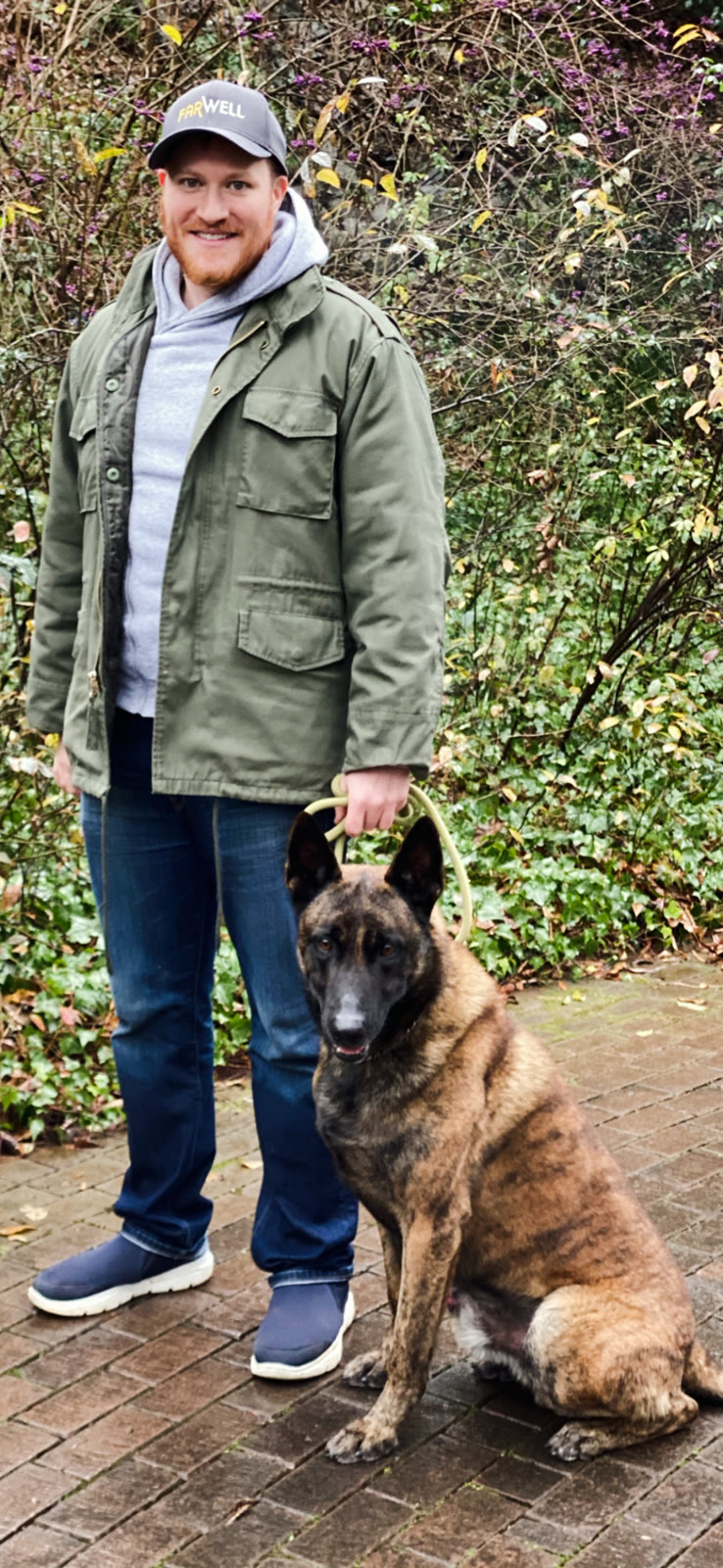
The AKC puts the adult Dutch Shepherd at 42 to 75 pounds of athlete. If that dog pulls, every walk becomes a contest you might not win. The AKC calls walking politely on a leash "one of the most important skills any dog can learn," and it is clear that the skill is taught, not inherited: "puppies aren't born knowing what a leash is." Here is why dogs pull, the gear that helps, and a step-by-step plan for a loose leash, all drawn from the AKC's trainers.
Why dogs pull
From a dog's point of view, the AKC says, people walk far too slowly. The natural human response to pulling is to pull back, and that rarely works. Dogs have an opposition reflex: pull on the leash and they pull back, drag them the other way and they dig in. The AKC is careful to say this is not stubbornness. It is simply how their bodies respond. The result is a tug-of-war, and with a large, strong dog, the AKC notes, the human will probably lose.
What "loose" actually means
The AKC describes a loose leash as one that hangs down in a "J" shape between you and your dog. That is not the same as a formal heel. Heeling is a more advanced skill for sports like Obedience and AKC Rally, which you can teach later. For everyday walks, the goal is a dog that stays near you, at or near your side, without pulling.
The gear
- Leash: the AKC suggests a lightweight 6-foot leash and says to avoid retractable leashes.
- Harness for puppies: a harness is generally the better option for puppies, so there is no pressure on the neck if they pull. For large puppies, the trainer the AKC quotes recommends a front-clip harness, which makes it easier to redirect a puller. Make sure it fits so the puppy cannot slip out and can move freely.
- For a determined puller: the AKC suggests a training harness or a headcollar while you build the skill.
- Treats: lots of small ones your dog is excited about, both high and low value.
The plan, step by step
1. Start at home, before the first walk
The AKC says to start leash training as soon as the puppy comes home, even before it is fully vaccinated or going out on walks. Get it used to wearing a harness with the leash attached, and reward it for staying close.
2. Teach a marker
Pick a clicker or a word like "yes." Click or say it, then hand over a treat, again and again in a quiet room, until your puppy perks up at the sound. Now the marker means "that's right, a treat is coming." Only use it when you have a treat to give.
3. Pay for eye contact
With the leash on, mark and reward every time your puppy looks at you. The AKC's trainer calls engagement "a skill" and works on "those auto check-ins." A dog that has been paid for checking in is likely to keep doing it on walks.
4. Add "let's go" and turns
Pair a cue like "let's go" or "with me" with moving off, and mark and reward every few steps. Before a turn, say your dog's name, then a cue like "turn" or "left," and reward as it turns with you. Your dog learns to follow you instead of getting dragged along.
5. Build the end-of-leash look-back
When your dog hits the end of the leash, say its name. When it looks back, mark it, reward it when it comes back to you, and start walking again. With repetition, the AKC says, that check-in at the end of the leash becomes automatic.
6. Pulling stops the walk
When your dog gets ahead of you, stop and change direction. When it turns to catch up, reward it with praise, a small treat and the chance to keep walking. The AKC's rule is simple: only let your dog walk when the leash is slack.
7. Then take it outside
Once the skill works in the house or the yard, add the distractions of the outside world with plenty of high-value treats. Keep marking and rewarding check-ins and a loose leash. The AKC is frank that this is a challenging skill and takes patience, especially around distractions.
Let the nose have a turn
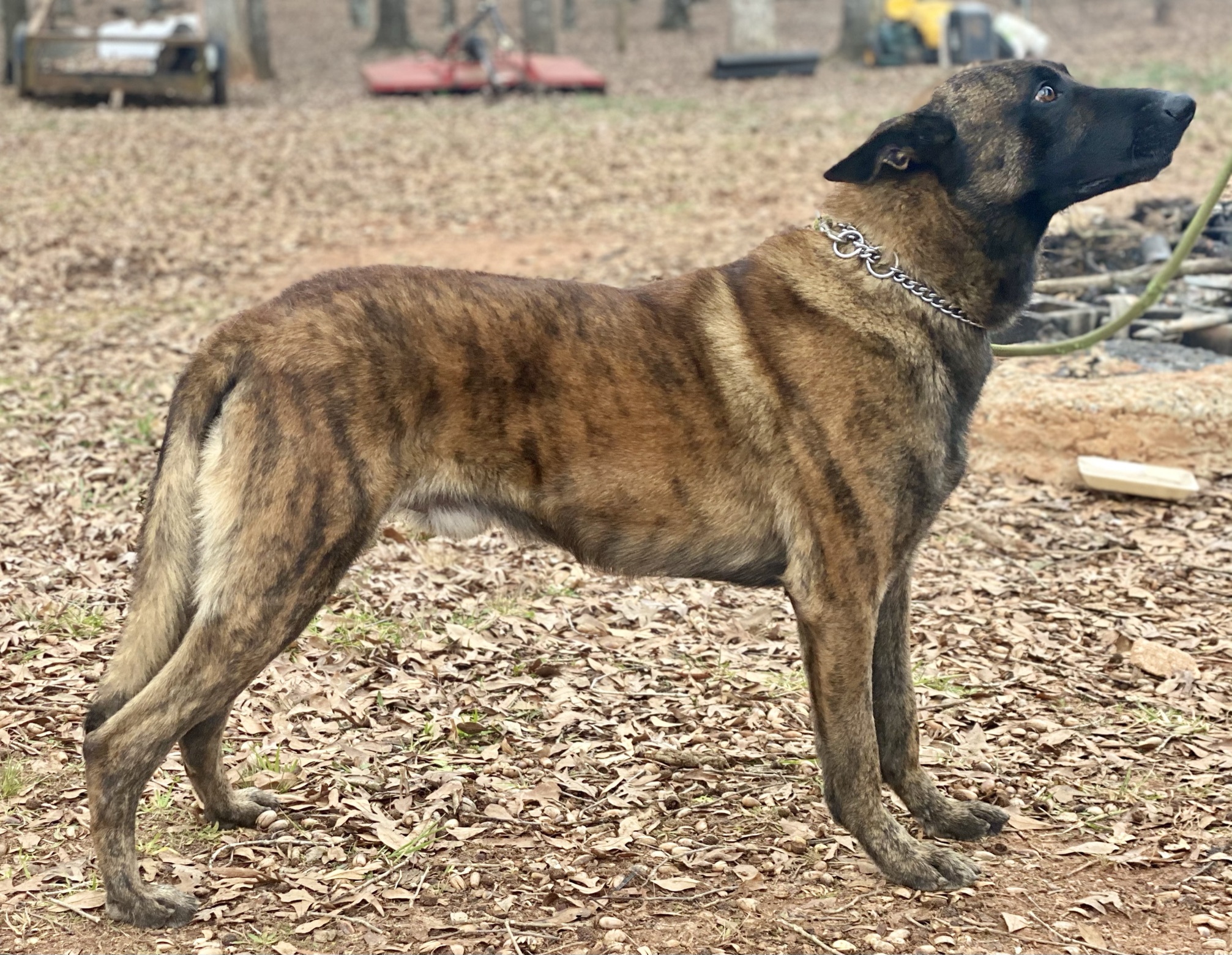
A walk is more than a bathroom break. The AKC says it gives a dog physical exercise, mental stimulation and "a chance to keep tabs on the neighborhood." Dogs have up to 300 million scent receptors, depending on the breed, against our five or six million. The AKC suggests rewarding short bursts of loose-leash walking with frequent sniffing breaks. Its trainer goes further: several times a week, take your dog somewhere it can "just sniff and go wherever they want." Counterintuitive as it sounds, more sniffing time can mean less pulling. For a breed that needs brain work, it pairs well with the games in Brain Work.
If your puppy bites the leash
Leash biting and tugging is a phase many puppies go through, the AKC says, and it is often a sign of boredom, frustration, or not yet understanding the leash. Its fixes: reward the behavior you want, keep the leash loose and behind your dog instead of dangling it like a toy, and for mouthy dogs, give them a ball or toy to carry. If your puppy grabs the leash, get its attention with a treat, say "drop," and reward when it lets go.
Get help early
The AKC says a trainer is never a sign of failure, and that working with one from the start can prevent bad habits. A puppy class such as AKC S.T.A.R. Puppy is a good first step.
Planning the first few months? Read our guide to the socialization window, then work through our ten honest questions.
Sources
- American Kennel Club: How to Teach a Puppy to Walk on a Leash (when to start, gear, marker, check-ins, cues, end-of-leash look-back, going outside, leash chewing, sniff walks, getting help)
- American Kennel Club: 3 Ways to Improve Your Dog's Walk (opposition reflex, the "J" leash, stop and change direction, harness or headcollar, scent receptors, sniff breaks)
- American Kennel Club: How to Stop Leash Tugging and Biting When Walking (why dogs bite the leash, rewards, toys to carry, leash handling)
- American Kennel Club: Dutch Shepherd breed page (weight range)