The Labrador Retriever topped AKC registrations for 31 straight years, and in the AKC's 2025 rankings it was still No. 2. If you grew up with a Lab, you know why. If you are now weighing one against a Dutch Shepherd, here is how the two breeds compare on size, coat, temperament, exercise, training, health screening and family life, using the American Kennel Club's breed pages and the official breed standards, and which one fits which home. We breed Dutch Shepherds, and our honest read is that a Lab fits more households.
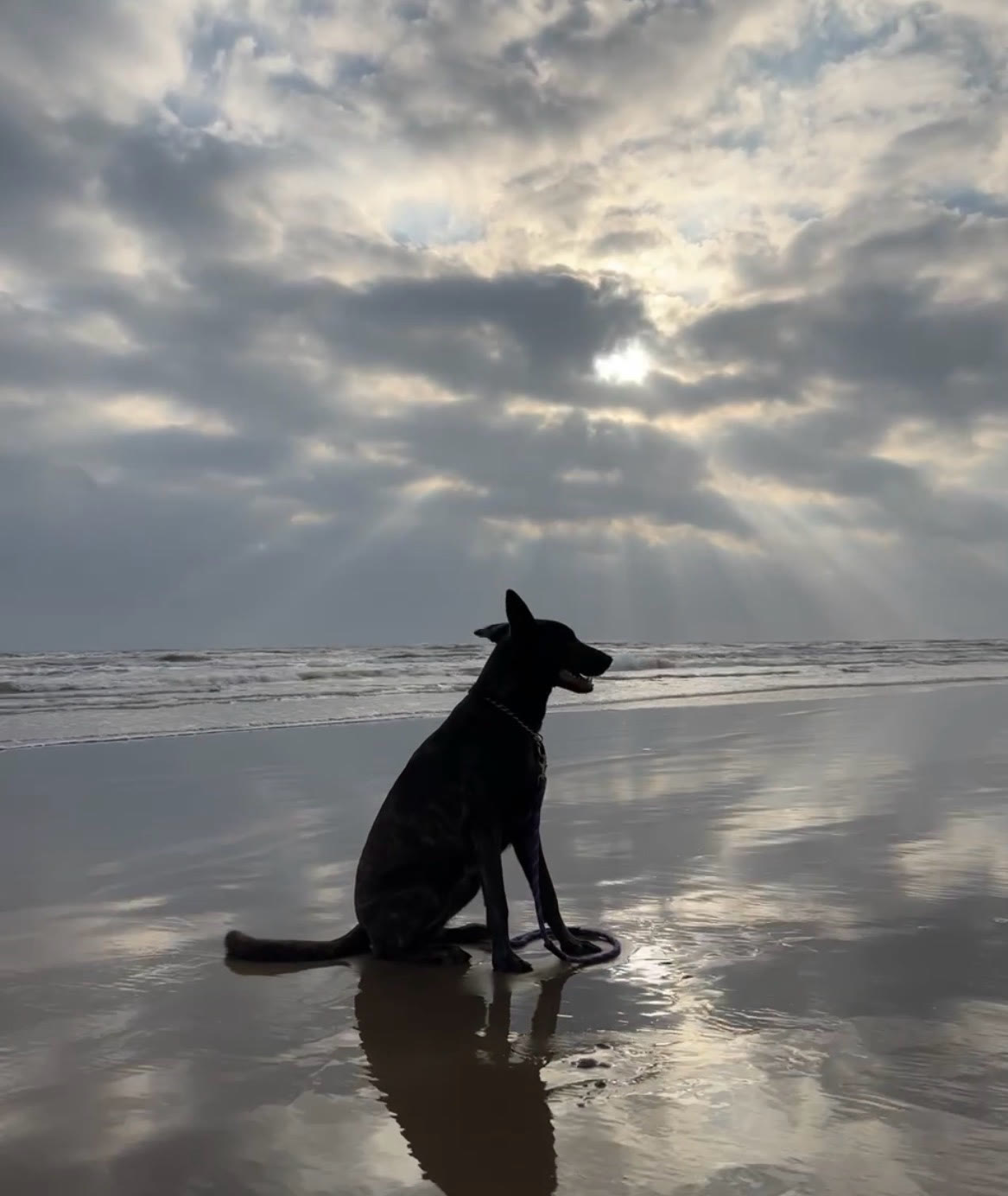
Side by side
Every figure below is the AKC's.
- Height: the two official standards give the same ranges, 22½ to 24½ inches for males and 21½ to 23½ inches for females.
- Weight: Labrador, 65 to 80 pounds for males and 55 to 70 pounds for females. Dutch Shepherd, 42 to 75 pounds, one range for the whole breed. These are the AKC breed pages' average sizes. The Dutch standard sets no weight.
- Life expectancy: Labrador, 11 to 13 years. Dutch Shepherd, 11 to 14 years.
- Coat: Labrador, short and dense with a weather-resistant undercoat. Dutch Shepherd, short, long or rough.
- Standard colors: Labrador, black, yellow or chocolate. Dutch Shepherd, brindle on a golden or silver base.
- AKC group: the Labrador is in the Sporting Group. The Dutch Shepherd has been assigned the Herding Group.
- AKC status: the Labrador was recognized in 1917. The Dutch Shepherd has been in the Foundation Stock Service since April 2012 and moves into the AKC Stud Book on June 30, 2027.
On height, the two standards match exactly. The Lab's is stricter about it: "Any variance greater than ½ inch above or below these heights is a disqualification." The Dutch standard disqualifies males under 21 or over 26 inches and females under 20 or over 25. Our pair, for the record: Azul (our female) is 75 to 80 pounds and Dabo (our male) is heavier. Those are two adult dogs, not a promise about any puppy's adult size.
Different jobs, different dogs
The AKC calls the Lab "the traditional waterdog of Newfoundland, long employed as a duck retriever and fisherman's mate." (It did not come from Labrador.) Its standard says the Lab is "bred primarily as a working gun dog," and in the same section asks for "the temperament to be a family companion."
The Dutch Shepherd was developed, the AKC says, as an all-purpose farm dog: a farm guard, a drover and a livestock dog. Its original duties included keeping flocks of sheep in one place, which is why it is able to run all day.
Temperament: the friendly retriever and the watchful shepherd
The Lab standard asks for "a kindly, outgoing, tractable nature; eager to please and non-aggressive towards man or animal." The AKC's breed page says "Labs are famously friendly," calling them "companionable housemates who bond with the whole family" that "socialize well with neighbor dogs and humans alike."
The Dutch Shepherd standard asks for "loyalty and reliability, alertness, and watchfulness," in a dog that is "active, independent, with persistence, intelligence, prepared to be obedient." The AKC's breed page is frank about the catch: the breed has "an independent nature" and "can be slightly obstinate and have a mind of its own."
Neither is a flaw. The Lab's standard asks for a kindly, outgoing dog that is non-aggressive toward people and animals. The Dutch Shepherd's asks for a watchful dog that works with its owner and handles a task on its own.
Energy and exercise: both need a lot
Do not pick a Lab expecting a quiet dog. The AKC calls it "an exuberant, very energetic breed that needs lots of exercise every day," and warns that a Lab without enough of it "is likely to engage in hyperactive and/or destructive behavior to release pent-up energy." Its favorite outlets, the AKC says, are retrieving and swimming.
The Dutch Shepherd, in the AKC's words, "has been bred for hard work, and plenty of it," and "does not want to be a pet left at home; they want to be your partner in life." It needs "proper mental and physical exercise." The good news is the off-switch: the breed "will differentiate between work, play, and chill time." Our exercise guide has more.
Training: classes for one, a job for the other
For the Lab, the AKC says "early socialization and puppy training classes are vital," with gentle exposure to new people and places between 7 weeks and 4 months. It calls Labs "devoted, intelligent, and enthusiastic companions who need to be included in family activities."
The Dutch Shepherd "does better with shorter training sessions (with little repetitions)." The AKC adds: "Without training, this breed will become very independent and will start to make its own decisions, so obedience training is highly recommended."
Both breeds hold serious jobs. The AKC names search and rescue, drug and bomb detection, and service and assistance work for the Lab, and herding, tracking, search and rescue and police work for the Dutch Shepherd.
Coat and grooming
The AKC describes the Lab's coat as a thick double coat that repels water and sheds, with occasional baths to keep the dog clean. A short-coated Dutch Shepherd needs only occasional brushing, switching to daily brushing during the spring and fall sheds. Neither breed is shed-free. Long and rough Dutch coats take more work, covered in our coat guide.
Health screening
The AKC calls Labs "healthy dogs overall" and says a responsible breeder screens breeding stock for elbow and hip dysplasia, heart disorders, hereditary myopathy and eye conditions, including progressive retinal atrophy. A DNA test lets breeders identify carriers of exercise induced collapse, which can occur in some young adult Labs. For a CHIC number, the Orthopedic Foundation for Animals asks for hip, elbow and eye exams plus DNA tests for exercise induced collapse and the D locus, with cardiac and two more DNA tests optional.
The AKC calls the Dutch Shepherd "generally a healthy breed," and credits Dutch breeding rules and the breed being lesser known. It says breeders should screen for hip dysplasia in all coat types, long-haired dogs for thyroid issues and rough-haired dogs for goniodysplasia. The national club recommends hip, elbow and eye evaluations.
For either breed, ask to see the results for both parents before you commit, and ask your veterinarian what they mean.
Family life
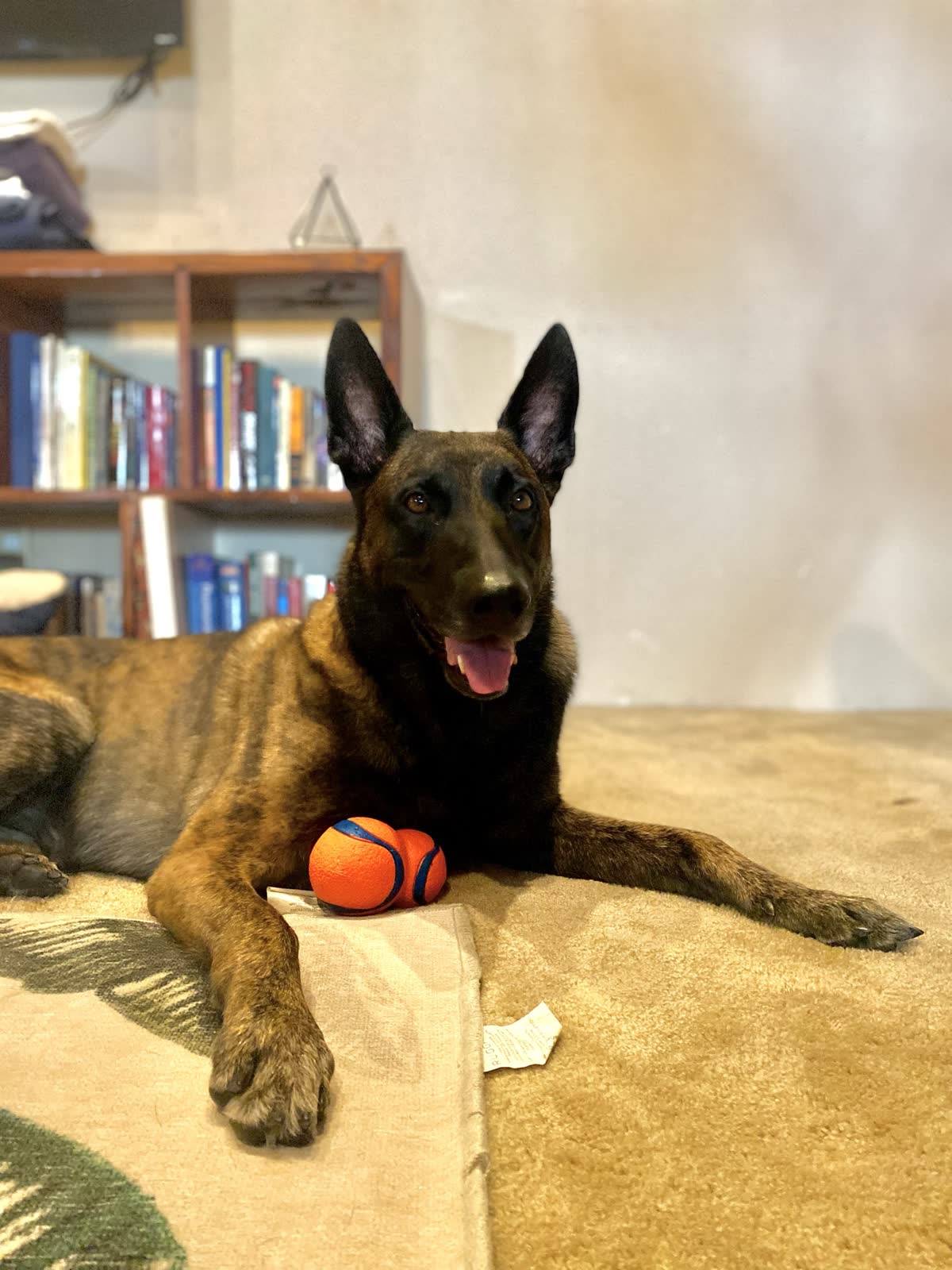
This is where the two breeds part ways most. The AKC's picture of the Lab is a dog that bonds with the whole family and gets along with the neighbors' dogs. Its picture of the Dutch Shepherd comes with a qualifier: with proper mental and physical exercise, the breed "makes a great pet for an active family familiar with dogs." Both breed pages carry the same reminder: "Dogs should always be supervised around young children."
Our own homepage puts it more bluntly: "These dogs are not for everyone." A Dutch Shepherd can be a wonderful family dog in the right home, and our guide to working dogs and kids covers what that home looks like.
Which dog fits which home
- Lean Labrador if you want a dog that is friendly with visitors and neighbor dogs alike, this is your first dog, and your family's idea of exercise is daily fetch, swimming and long walks.
- Lean Dutch Shepherd if you have raised dogs before, you enjoy training rather than tolerate it, you want a watchful partner, and you will give the dog a job every day.
- Choose neither if you want a dog that is fine alone all day or with little exercise. The AKC's descriptions of both breeds point the other way.
For more households, that first bullet is the one that fits, and there is nothing wrong with that. A good Lab in the right home beats a Dutch Shepherd in the wrong one.
Weighing other breeds too? Read our honest comparison with the German Shepherd, then work through our ten honest questions.
Sources
- American Kennel Club: Labrador Retriever breed page (size, life expectancy, colors, group, 1917 recognition, temperament, health, recommended tests, grooming, exercise, training, history, 31 years at No. 1)
- American Kennel Club: Official Standard for the Labrador Retriever (PDF, approved February 12, 1994; height, weight, coat, colors, temperament)
- American Kennel Club: The Most Popular Dog Breeds of 2025 (Melanie Haid, updated August 11, 2026; Labrador Retriever No. 2)
- Orthopedic Foundation for Animals: Labrador Retriever CHIC requirements (required and optional screening)
- American Kennel Club: Dutch Shepherd breed page (size, life expectancy, group, origin, temperament, health, recommended tests, grooming, exercise, training, AKC status)
- American Kennel Club: Official Standard for the Dutch Shepherd (PDF, effective January 1, 2017; height, coat, color, temperament)
- American Kennel Club: Board of Directors meeting minutes, September 15 to 16, 2026 (PDF; Dutch Shepherd Stud Book entry June 30, 2027)