"The more patient you are, the better your chance of success," Humane World for Animals says about introducing a new dog to the ones you have. The AKC's breed page gives the Dutch Shepherd a 3 out of 5 for Good With Other Dogs, the middle of a scale that runs from "Not Recommended" to "Good With Other Dogs." The same page says the breed "has retained its herding instinct for which it was originally developed." If there's already a dog or a cat in your house, the first weeks matter. Here is how to plan the first meeting, run the first weeks, and introduce a puppy to a cat, sourced to the AKC and Humane World for Animals.
What the AKC's score tells you
The AKC describes Good With Other Dogs as "how generally friendly a breed is towards other dogs." It adds: "Dogs should always be supervised for interactions and introductions with other dogs, but some breeds are innately more likely to get along with other dogs, both at home and in public."
In plain terms, a 3 is not a warning and not a promise. It means the introduction is up to you. A Dutch Shepherd puppy can grow up alongside another dog, but the AKC's own guides say that takes a plan, supervision and time.
Before the puppy comes home
Start with the dog you already have. The AKC says "it's important to be honest about your adult dog's temperament and level of training." Veterinary behaviorist Dr. Valli Parthasarathy, quoted by the AKC, puts it this way: "Even though you may have a dog who gets along really well with puppies, it doesn't mean they will get along with a puppy in their own home. It's very different to have a puppy visiting you vs one that is there 24/7."
- Start with a vet visit. "The first thing I would do is take the older dog into your vet, and make sure the older dog is healthy," Dr. Valli says. The AKC notes that any kind of physical discomfort "can increase reactivity for a dog"
- Check your dog's manners first. "Before you get a new dog, be as confident as possible that your current dog is in a good place emotionally and behaviorally," Dr. Valli says. The extra distraction of a puppy "is likely to exacerbate any ongoing behavioral issues," the AKC adds
- Be ready to keep them apart. If your dog is dog-reactive or dislikes other dogs, the AKC says you must consider whether you have "the time, resources, and space to manage if the dogs need to live separately within the house"
- Set up the house. "A crate, an exercise pen, and dog gates are all helpful tools when you need to quickly separate the dogs," the AKC says. Plan your routine from the first day
The first meeting: outside, on neutral ground
The AKC says the first meeting should be "in a neutral place," not inside your dog's home. One option it suggests is to take your dog along when you pick up the puppy, with each dog in its own crate on the ride home. If you can't bring your dog along, the AKC says the dogs "should still meet outside of the home and walk in together." Then walk them around on leashes in the front yard and go inside together. "An unknown puppy barging in the front door can seem like an invasion to even the friendliest, most mellow dog."
Humane World for Animals uses the same idea for any two dogs, with a walk:
- Start at a distance. Walk each dog on its own leash with its own handler and "a bag of high-value treats." Keep them far enough apart that they "can see each other but are not too provoked by each other's presence," and reward them "just for seeing each other"
- Close the gap slowly. When they're comfortable up close, let one dog walk behind the other, then switch. Then side by side. Then a supervised hello
- Read their bodies. Hair standing up on the back, "teeth baring, growling, a stiff-legged gait or a prolonged stare" means calmly interrupt and get your dog interested in something else
- Don't push. "The most important thing is to take this introduction slowly," Humane World says. "Do not force the dogs to interact"
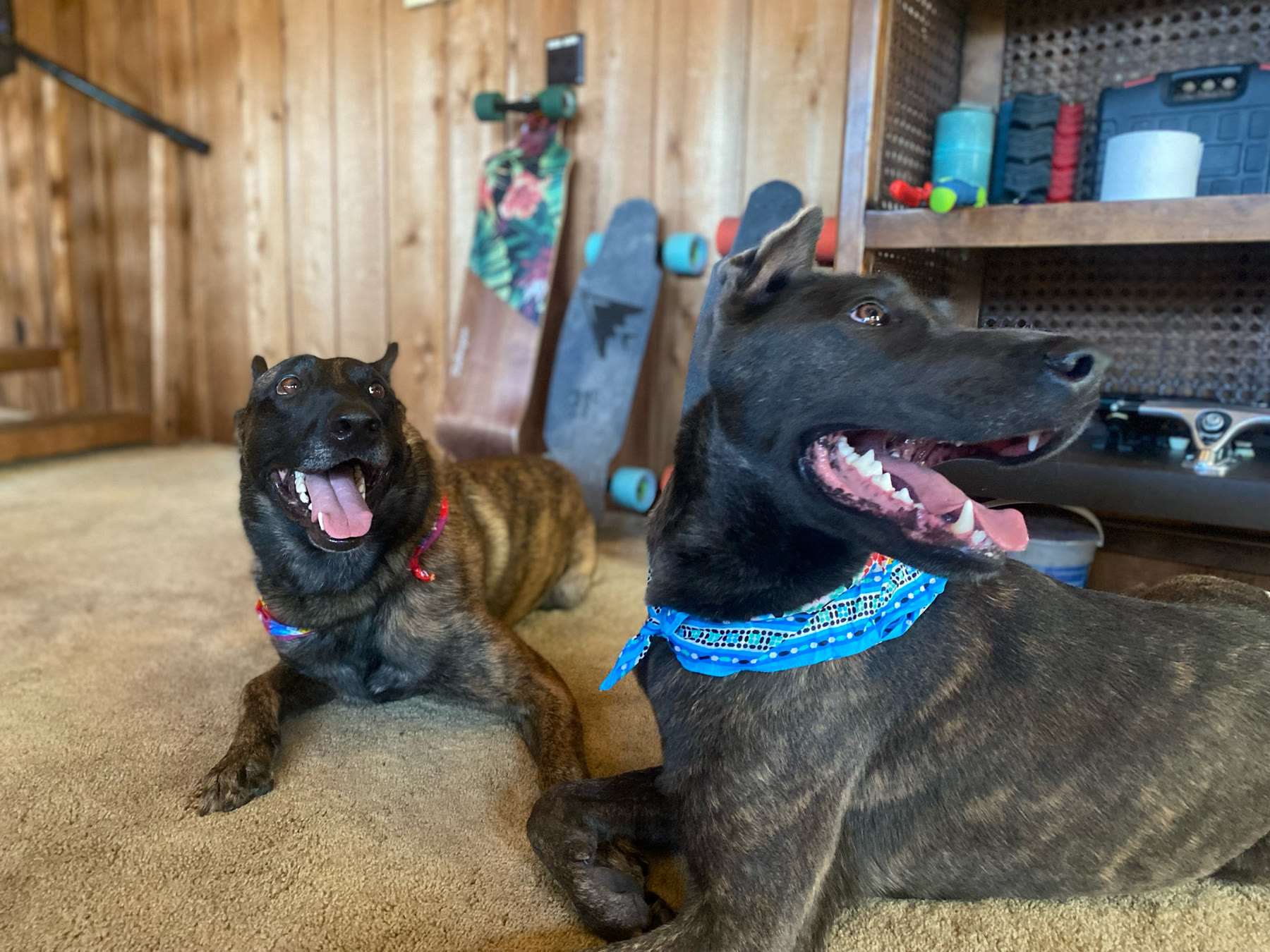
The first weeks at home
The AKC says puppies "are still developing their communication skills" and "don't understand the rules set in place by adult dogs." A puppy looks for someone to play with, and the adult dog is "the next best thing. Your dog may or may not appreciate this!"
- Supervise every interaction. When you can't watch, the AKC says the puppy goes "behind a gate and in an exercise pen or in a crate." Dr. Valli says the puppy should have its own contained area. For the first meetings inside, Humane World suggests "a sturdy, tall baby gate" between the dogs
- Give your older dog breaks. The AKC suggests breaks "several times during the day," and one-on-one time with the family. "Puppies, while adorable, can be annoying to older dogs"
- Pick things up. Humane World says to make sure "there are no toys, food or treats left around the home that the dogs could potentially fight over"
- Tire the puppy out. The AKC says to make sure your puppy gets "enough mental and physical exercise, so they're not focusing all their attention on the older dog"
- Reward good manners. Treat both dogs for calm, polite behavior around each other (AKC, Humane World)
Growls, play and who does the teaching
"Don't reprimand the adult dog for growling at the puppy," the AKC says. A growl is how an older dog tells a puppy it has "crossed the line," and the AKC says that's acceptable "as long as the adult dog doesn't make inappropriate contact and injure the puppy." If your older dog starts getting agitated, separate the dogs or redirect the puppy before things get out of hand.
Play can fool you too. "Just because two dogs are playing or appear to be playing doesn't mean they are comfortable," Dr. Valli says. She warns about "defensive play," where an older dog plays only to get a pestering puppy to stop. Watch who starts the game.
And don't hand the training to your older dog. Dr. Valli calls the idea that dogs can work out their issues by themselves one of the big myths. She explains that puppies often aren't socially savvy enough to recognize when an older dog has had enough. If your puppy plays rudely, step in and redirect it yourself. Our puppy biting guide covers teaching a soft mouth.
Watch for the teenage shift
An older dog that puts up with a young puppy may not put up with a teenager. Dr. Valli says that when puppies hit puberty, between the time they're 6 months to a year old, an older dog may become less tolerant of their behaviors. Keep watching body language as your puppy grows, and separate or redirect when either dog looks uncomfortable.

Introducing a puppy to a cat
"Not all dogs will get along with cats, and not all cats will enjoy life with a dog," the AKC says. "However, puppies that were socialized with cats will be more comfortable around cats as adults." The AKC also says "chasing is an instinct for dogs." For a breed it says has kept its herding instinct, we'd plan the cat introduction as if your puppy will want to chase, and train so it never gets the chance. The AKC's steps:
- The first few days: sounds and smells only. Keep them apart "for at least the first few days." Give each pet its own safe space, and swap toys or a blanket so each one smells the other, paired with food or treats
- Meals on both sides of a door. Feed the dog and cat on opposite sides of a closed door, a few feet back at first, then closer until they eat right at the door
- First look through a gate. A dog gate or screen door lets them "see each other without any risk of injury"
- Same room, dog on leash. Let the cat move freely "so they can escape if needed," and keep your dog on a leash attached to you. Keep meetings "short and sweet," several a day "for at least a week"
- Ask for calm. Ask for a sit or a down, and a stay, while the cat wanders nearby, and reward it. Use "leave it" to say the cat is off-limits, then "watch me." If your dog does chase, redirect it to fetch or a toy
- Loosen up slowly. A long line comes next, then off-leash time while you supervise. "Until you're sure of the outcome, which could take a few weeks or months, it's best to not leave them together alone"
Give your cat a permanent dog-free room behind a baby gate or a cat door, with its litter box, bed, water, toys and a scratching post. The AKC also suggests shelves or tall cat trees for escape, and feeding the cat where the dog can't reach.
A second AKC article, by Anna Burke, says dogs chase cats "not because they dislike them. It's simply prey drive at work, a natural instinct that takes training and socialization to override." It also warns that "large dog breeds with strong prey drives may injure cats," and lists three safety steps: a leash during introductions, escape spaces for the cat, and a crate or separate rooms whenever you're not home to supervise. The good news, from the same article: "Puppies and kittens introduced at a young age are more likely to accept one another."
When to get help
Humane World says: "For help with introductions that don't seem to be going well, contact a professional dog trainer or animal behaviorist." The AKC suggests a trainer who uses positive reinforcement, even before the puppy comes home. If you see any avoidant or aggressive behavior between your dogs, Dr. Valli recommends getting professional support sooner rather than later.
The question to ask before you apply
A puppy in a house with another dog or a cat means gates, crates, separate meals, short supervised meetings and a lot of rewards for calm, and it can take weeks or months. Our application asks you to describe your home and how many hours the dog will be alone on a weekday. If there's a dog or a cat in your house, tell us about them, including how your dog does with puppies.
More for the first months: socializing a puppy, crate training and teaching an off switch.
Sources
- American Kennel Club: Dutch Shepherd breed page (Good With Other Dogs 3 of 5 and the trait description, "has retained its herding instinct")
- American Kennel Club: How to Introduce a New Dog to Your Current Dog (AKC Staff, updated Mar 24, 2026; preparing the house, meeting on neutral ground, growling, supervision, breaks, exercise)
- American Kennel Club: Adult Dogs and New Puppies: Understanding Both Dogs' Needs (Sassafras Patterdale, quoting veterinary behaviorist Dr. Valli Parthasarathy, updated Feb 4, 2025; your current dog first, defensive play, puppy space, not making your dog correct the puppy, puberty, getting help)
- American Kennel Club: Like Cats and Dogs? Teach Your Pets to Live in Harmony (Stephanie Gibeault, updated Feb 27, 2026; step-by-step cat introductions, calm behavior, leave it, the cat's dog-free space)
- American Kennel Club: Do Dogs Really Hate Cats or Can They Get Along? (Anna Burke, updated Jul 14, 2026; prey drive, early socialization, safety tips)
- Humane World for Animals: Introducing your new dog to your other dogs (neutral-territory walks, body language, letting the dogs set the pace, the baby gate, removing toys and food, getting help)